

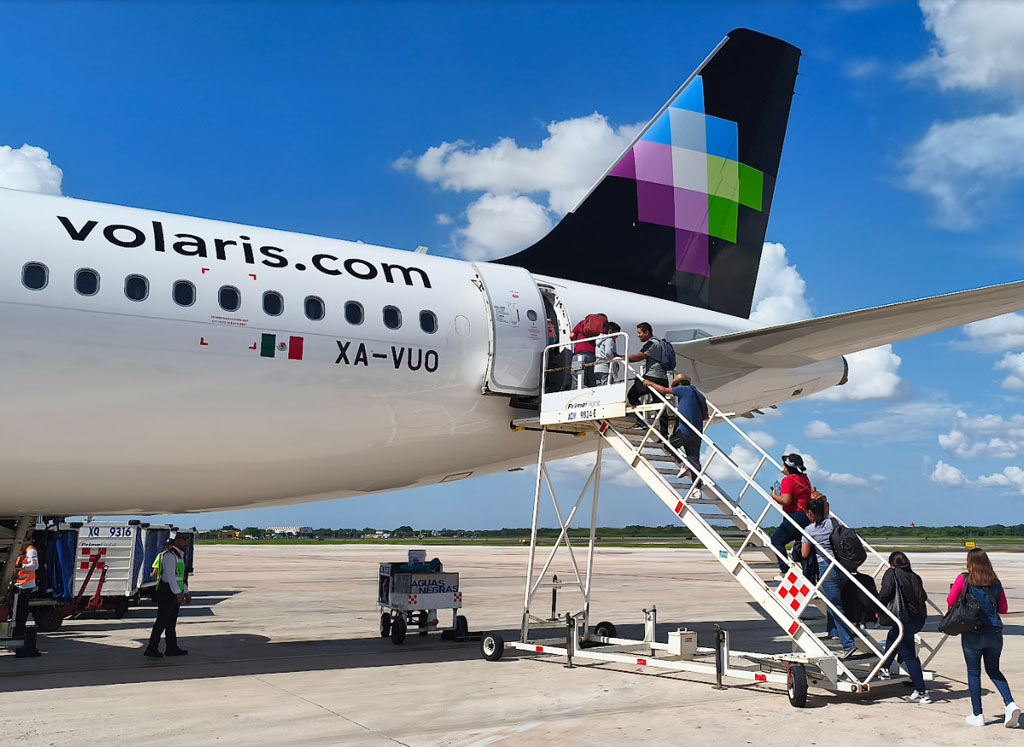
Mexican low-cost carrier Volaris has taken a significant step toward becoming a more prominent player in international aviation by signing a code-sharing agreement with Turkish Airlines, one of the world´s most extensive airline networks.
The move comes just weeks after Volaris and its former rival, Viva, announced a merger that would make the airline the largest domestic operator in Mexico.
The June 3 agreement represents a strategic move that could reshape how Mexican travelers access destinations across Europe, Asia, Africa, and the Middle East.
Additionally, the airline has announced a new direct route between Mérida and Tijuana that will operate four times per week beginning on July 1, connecting the Yucatán Peninsula with the border city of Tijuana in approximately four hours.
Code Sharing as a Tool for Airline Expansion
For travelers unfamiliar with the term, code sharing is a commercial arrangement between two or more airlines in which one carrier allows another to place its flight code on flights it operates.
The concept originated in 1989 when Qantas and American Airlines combined their services to offer passengers greater route choices between Australia and the United States.
In practice, a passenger can purchase a ticket from Volaris for a flight that is physically operated by Turkish Airlines, or vice versa, while enjoying the convenience of a single booking and through-checked baggage.
Frequent flyer programs are typically integrated as well, allowing passengers to earn and redeem miles across both airlines. This seamless experience contrasts sharply with booking separate tickets on different carriers, which leaves travelers responsible for collecting baggage and rechecking it during connections, with no recourse if the first flight is delayed.
What the Volaris-Turkish Airlines Agreement Means for Both Carriers
The newly signed agreement connects Turkish Airlines’ global network, which serves more than 130 countries, with Volaris’ extensive domestic operations in Mexico. Under the arrangement, passengers traveling from Istanbul can fly to Mexico City or Cancún on Turkish Airlines, then connect to various destinations operated by Volaris within Mexico.
Conversely, Mexican travelers can use Volaris to reach the gateway airports of Mexico City and Cancún before transferring to Turkish Airlines flights for international journeys.
Holger Blankenstein, Volaris’ executive vice president, stated that the alliance strengthens the airline´s value proposition by expanding international connectivity options and positioning Volaris as a key partner for international airlines in Mexico. Levent Konukcu, Turkish Airlines´ chief investment and strategy officer, noted that Mexico represents an important market for the Turkish carrier and that this collaboration offers an opportunity to strengthen its presence and expand its connectivity within the country.
For Volaris, which has traditionally focused on point-to-point low-cost operations within Mexico and to select United States destinations, this agreement represents a departure from the pure low-cost carrier model.
Traditional low-cost carriers have historically avoided code sharing because their business model relies on simple, direct operations with quick aircraft turnarounds.
Domestically, Volaris is also expanding. The airline will increase operations at Mexico City´s international airport by 33% in July, offering an average of 72 daily flights across 22 domestic routes and three international routes to Los Angeles, Oakland, and Chicago O´Hare.