

Farmers in Sierra Papacal in far northwest Mérida halted construction work on the Maya Train Sunday. The farmers,who said they disagree with how the project is being carried out, blocked the road at kilometer one of the Chuburná Puerto highway.
The main complaint is that they believe authorities want to take their land for the section connecting to the port. They said no government official had approached them to discuss compensation for their property.
The farmers also raised concerns about water being taken from wells on their land. This water supplies several areas of Progreso. As a way to pressure the government, the farmers shut down 10 drinking water wells early that morning. These wells serve the Progreso communities of Chuburná and Chelem, as well as the Yucalpetén industrial zone.
Despite the shutdown, there was no major disruption in those areas because sufficient water was stored, and the protest did not last long. Officials said the water supply would return to normal within hours.
The farmers also threatened to close the state highway from Sierra Papacal toward Chuburná Puerto.
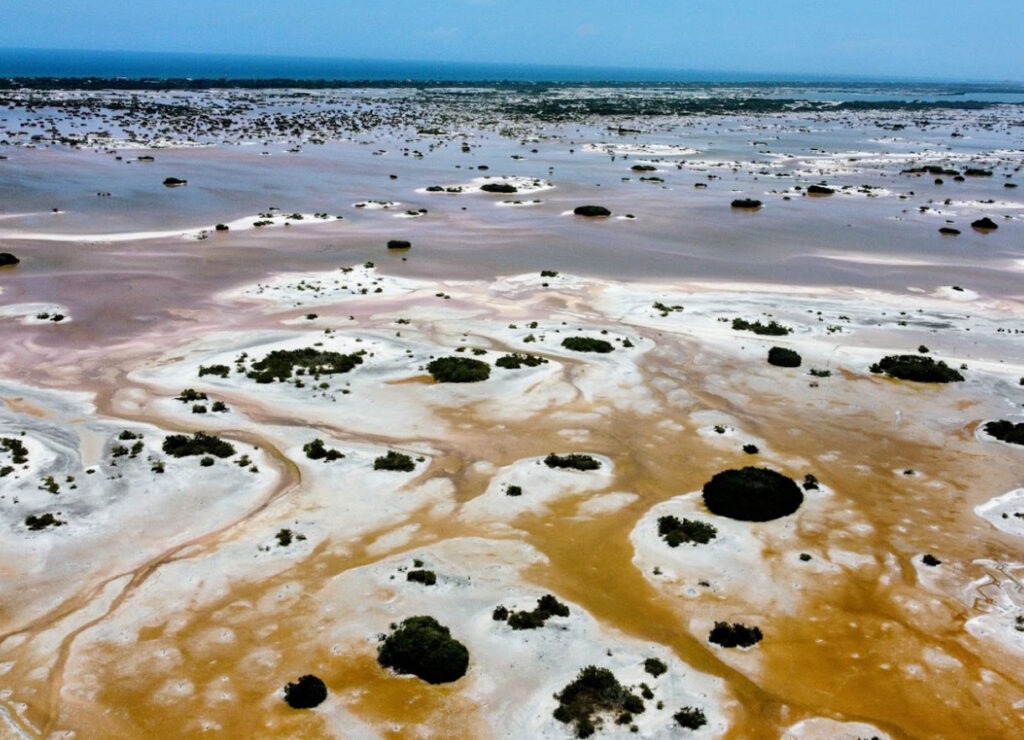
The situation goes back more than 30 years. The farmers say the federal government has been taking their land for a long time. According to the farmers, it all began on November 27, 1992. A presidential decree took 223 hectares of common land from them, claiming it was for public use. The stated reason was to extract drinking water for the communities of Chelem and Chuburná. But the farmers say they never received any payment for their land.
Now they see their land being used for the Maya Train rather than for water wells. One affected farmer said, “They took our land with a lie, and now they profit from it for the Train. It is a shameless robbery”.
There are also problems within the community itself. The farmers say their own commissioner, Gilberto Pech Tho, has taken over the community building where they should hold meetings. They accuse him of involvement in the irregular transfer of land for the train.
They also denounced their legal advisor, Juvencio Valdez. They claim he led a corruption network that extorted more than 200 farmers. He supposedly promised to process payments for their land, but instead took more than 100,000 pesos from each person without delivering anything. One farmer said, “No authority has approached us to talk or to discuss compensation”.
When state government officials finally arrived, they spoke with the protesters. The Secretary General of Government, Omar Pérez Avilés, and the Undersecretary of Government and Political Development, Pablo Castro Alcocer, came to the site to talk.
Later that afternoon, the state government issued a statement. It said the administration repeated its willingness to open a dialogue with the farmers. This was especially about the land expropriation that came from the 1992 presidential decree.
After talking with the authorities, the farmers agreed to restart the water pumping. They also agreed to continue discussions in the coming days. However, officials did not say whether the blockade of the construction of the Maya Train had ended.
The farmers have made it clear they want complete repair of the damage done to them. They demand immediate transparency about what is happening on their land. They warn that if the government stays silent, the conflict could grow. They say they will not allow what they call an alarming precedent for farmers all across Yucatán.