

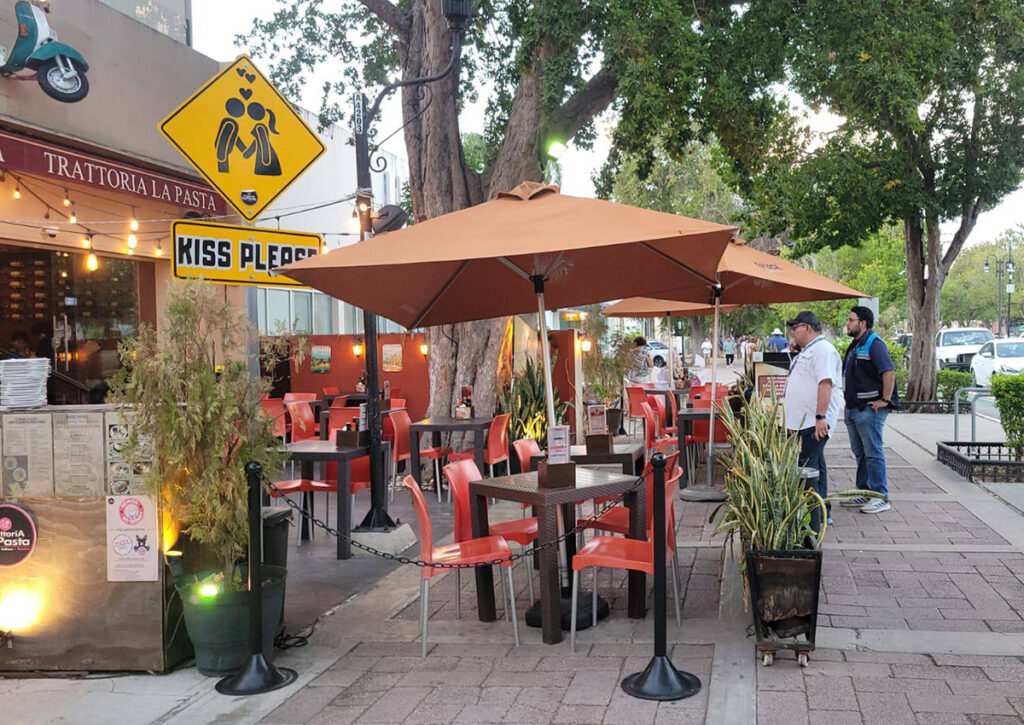
No more tripping over waiters when taking a walk on the Paseo de Montejo. At least for now.

With reporters in tow, city inspectors fanned out across Mérida’s Paseo de Montejo on Tuesday, removing furniture and signs and closing an unlicensed café patio in a push to clear sidewalks of commercial encroachments that have been squeezing pedestrians for years.
About 30 inspectors and officials from the city’s Technical Secretariat of the Public Market Service (Secretaría Técnica del Servicio Público de Mercados) and the Urban Development Directorate (Dirección de Desarrollo Urbano) walked the length of Mérida’s most famous boulevard. The operation was ordered under the administration of Mayor Cecilia Patrón Laviada.
Seven businesses had set up outdoor tables and chairs on public sidewalk space without authorization, blocking pedestrian flow. Inspectors removed the furniture and freed up sidewalk areas that restaurants had been using as de facto outdoor dining rooms. Irregular advertising — signs attached to benches, trees and utility poles — was also pulled down.
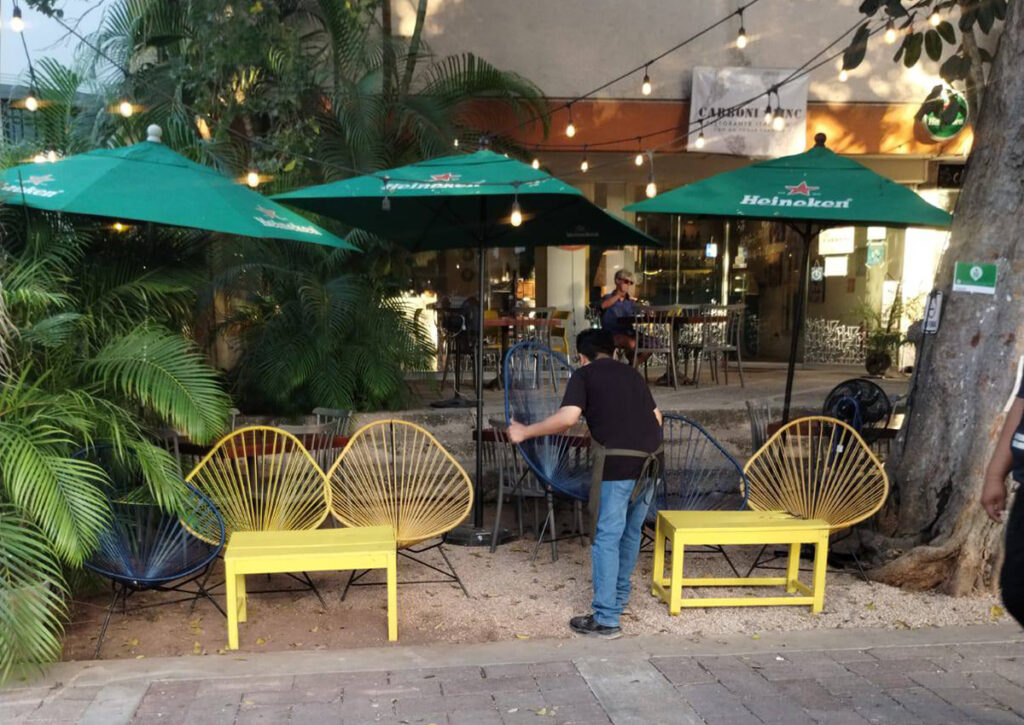
Photos released by city hall show well-known dining spots among those reined in, including the Italian restaurant Carboni, Trattoria la Pasta and Sorbetería Colón. None of the three faced closure; the action against them appeared limited to reclaiming the sidewalk and public green areas that had been occupied by tables and outdoor seating.
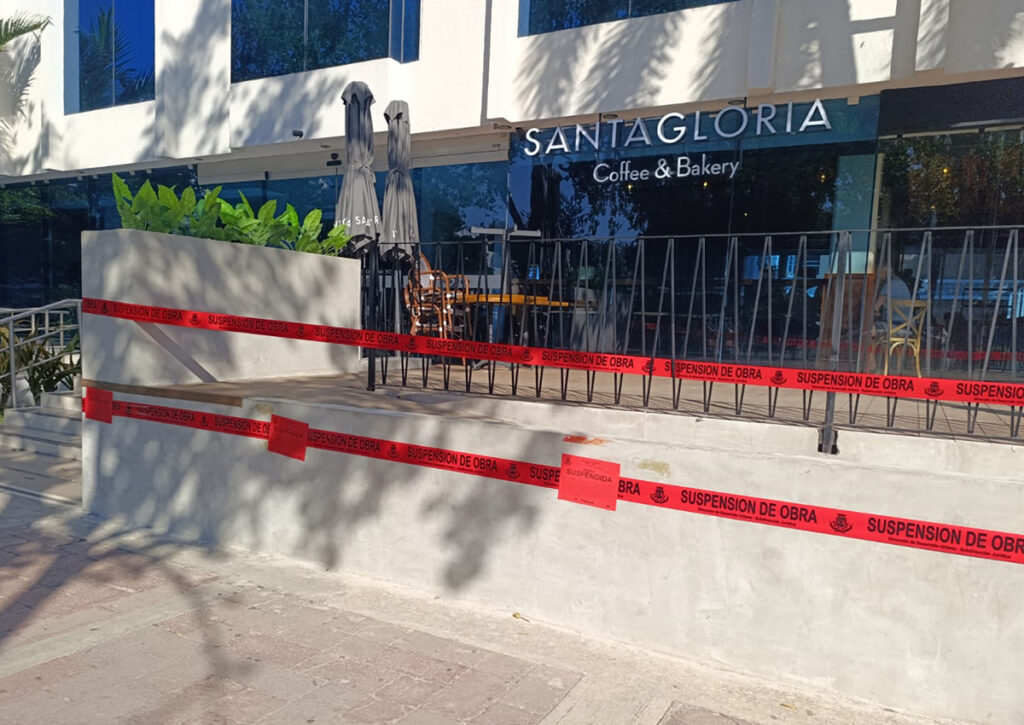
The most dramatic action of the day targeted the relatively new Santa Gloria cafeteria, which had been operating at the entrance to the Hotel Español, in a green area alongside the avenue. The café lacked construction permits from both the Urban Development Directorate and the National Institute of Anthropology and History (Instituto Nacional de Antropología e Historia, or INAH), which oversees development near historic structures. City officials posted closure seals on the establishment.
Alfonso Lozano Poveda, technical secretary of the Public Markets Service, emphasized that the action was preventive rather than punitive, focused on dialogue with merchants and urging compliance with existing rules.

“Respect for the regulations is vital,” Lozano Poveda said, adding that the city wants to strengthen civic coexistence and the orderly use of shared spaces.
The operation drew public attention on social media, where residents quickly called for similar enforcement in other parts of the city. Parque Santa Lucía, the charming colonial-era park a few blocks from Paseo Montejo, was among the spots residents named as needing attention, citing restaurants and vendors that regularly spill onto surrounding sidewalks and public spaces.
Paseo de Montejo’s wide sidewalks and shaded promenades are among Mérida’s main draws for tourists. The boulevard stretches more than six kilometers from downtown toward the northern edge of the city, lined with grand mansions built by henequen-era (henequén) plantation owners in the late 1800s and early 1900s. Many of those buildings now house hotels, restaurants, museums and banks. The avenue also hosts weekly events, including the Sunday morning BiciRuta, which closes one side of the boulevard to motor traffic for cyclists and pedestrians.
In recent years, Paseo Montejo has been the subject of ongoing debates about how to balance the competing needs of drivers, cyclists, pedestrians and merchants. Disputes over bike lane infrastructure and concrete planters have kept city planners and business groups at odds, and Tuesday’s sidewalk sweep adds another layer to a broader conversation about how the avenue should look and function.
City hall said it intends to continue monitoring different parts of Mérida, with enforcement actions focused on balancing commercial activity against the public’s right to move freely on city streets.
Quick Facts: Tuesday’s Paseo Montejo Operation
- About 30 inspectors and officials participated in the sweep
- Seven establishments were ordered to have their outdoor furniture removed from public sidewalk areas
- Restaurants shown in city photos include Carboni Italian Restaurant, Trattoria la Pasta and Sorbetería Colón
- Illegal signs were cleared from benches, trees and utility poles
- The Santa Gloria cafeteria, at the Hotel Español entrance, was sealed for lacking permits from the Urban Development Directorate and INAH
- The operation was led by the Technical Secretariat of the Public Market Service and the Urban Development Directorate
- Residents on social media called for similar action at Parque Santa Lucía and other areas of the city
- City Hall says further enforcement operations are planned across Mérida, but didn’t say where