

Seeing Chichén Itza for the spring equinox may be next to impossible this year, as vendors and federal authorities have reached an impasse that could escalate into violence.
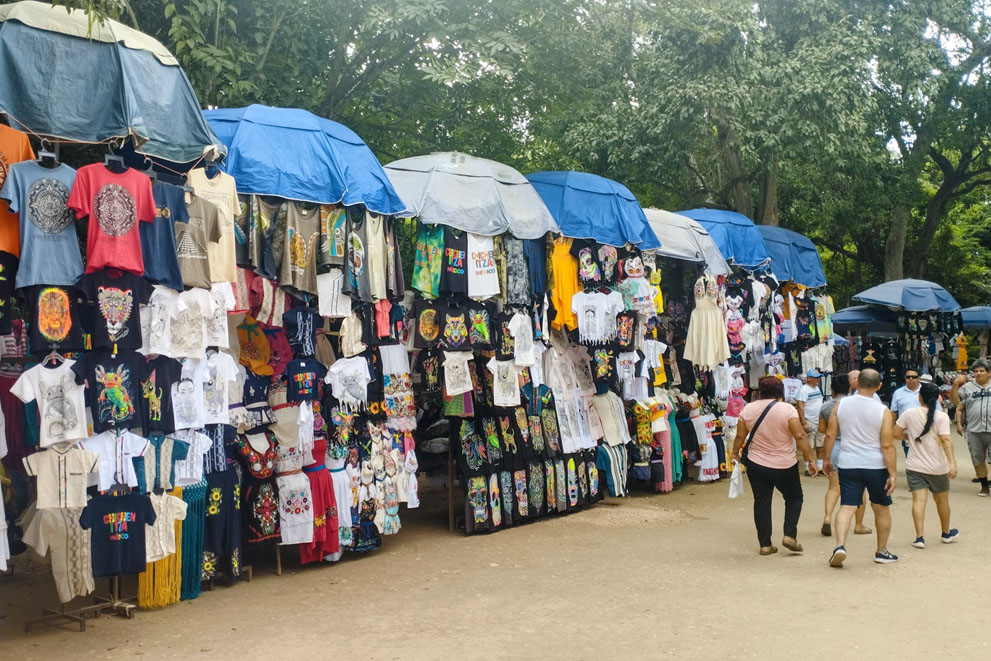
The conflict stems from a redesign of how visitors experience Chichén Itzá, which includes a new entrance that bypasses the numerous makeshift market stalls selling t-shirts and trinkets. This change is meant to discourage vendors from setting up shop inside the archaeological site.
Vendors are up in arms. Many have begun to protest under the slogan “Solo nos van a sacar muertos,” or “Over my dead body.”
The new entrance and visitor center is scheduled to open on Monday, the same day as the beginning of the spring equinox—one of the busiest days of the year at Chichén Itzá.
The standoff is likely to result in disruptive protests and roadblocks in Chichén Itzá, potentially limiting access to the site.
This is not the time vendors have felt pressure to leave. But all previous attempts by state and federal authorities have failed.
Aside from the vendors themselves, there has long been a consensus among visitors and authorities that the number of vendors at Chichén Itzá is overwhelming and detrimental to the experience of exploring the site.
While no warnings have been issued for visitors to stay away from Chichén Itzá on March 16, the potential for disruption is being called “a ticking time bomb” by analysts at outlets including Novedades Noticias and Diario de Yucatán.
“Everyone has the right to make a living, but this is a bit much. The vendors are pushy and loud. It really makes it harder to take in the majesty of this great site when people are yelling at you to buy a trinket from them,” said Italian tourist Giovanni Bianchi during a recent visit.
At the core of the conflict is a conviction among vendors that they have a legal right to access the archaeological site and set up shop without any government interference. Mexican law does make certain allowances for persons of indigenous descent to benefit from their own cultural heritage. Still, when it comes to federal archaeological sites, the INAH ultimately has the last word.
A similar conflict has been unfolding over the past several years at the archaeological site of Mayapán, where members of the ejido of Telchaquillo have blockaded the site. The demands of the ejido members include complete control over the zone and the right to charge admission.
In August 2017, a group called Los Mayas de Hoy issued a statement arguing that the state government, led then by Rolando Zapata Bello, canceled a $35 million project to improve facilities for vendors at the archaeological site. The same group is now petitioning the federal government and INAH to sign a document promising that vendors won’t be removed from the archaeological site.
More recently, in January 2023, about 700 vendors, independent tour guides, and local landowners blocked access to Chichén Itzá for 10 days from both directions, these being roads from Pisté and Xcalacoop. The action was coordinated to demand that Marco Antonio Santos Ramírez, the director of the archaeological site, be fired on grounds of corruption.
“They (INAH) make millions a year, and we, who own the land through our cultural heritage, receive nothing,” said Silvia Cemé, a leader of the artisans from Pisté.
More than 75% of the income from admission fees at Chichén Itzá does not go to the INAH, which is charged with managing and maintaining Mexico’s heritage site, but rather Yucatán’s state culture ministry, or CULTUR.
The new entrance and visitor center are an improvement in many ways, including more parking spaces and restrooms. The complex is also home to Chichén Itzá’s museum, which, despite having been open for two years, has received remarkably few visitors.
The protesters ceased the blockade after Andrés Peraza, a federal government representative in Yucatán, met with protest leaders in Kaua. Perza agreed to sign a document to take to Mexico City, listing the protestors’ demands, which included fair treatment for workers and the firing of Santos Ramírez and other allegedly corrupt officials.
INAH removed Santos Ramírez and, on July 10, 2023, appointed archaeologist José Francisco Osorio León as the new director of Chichén Itzá.