

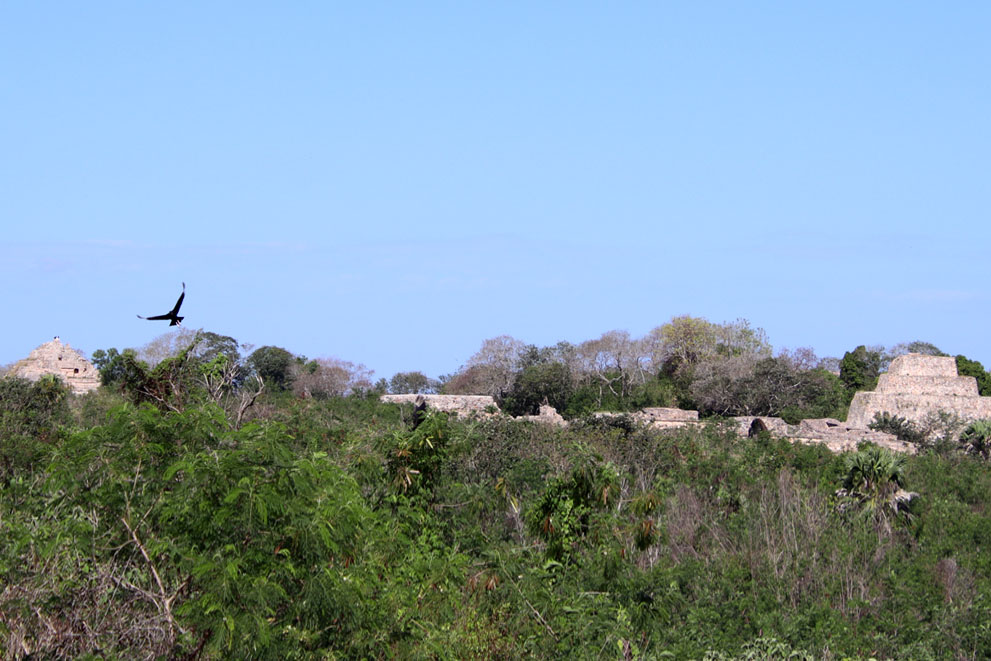
The Maya city of Oxkintok is among the most impressive yet most neglected by INAH.
According to a former custodian of the site who recently quit in frustration, Oxkintok has not received any resources from the federal or state government since early October.
“It makes me extremely upset. As you can see, the weeds are overgrown across much of Oxkintok, and there are also dangerous hornet nests in many of the structures, which have stung visitors on several occasions. It’s just heartbreaking,” he said, wishing to remain nameless.
The current custodian of the site, who says he has been working at Oxkintok on his own for months, also says he has had to pay for basic supplies like gasoline for weed wackers out of his own pocket.
As at several other archaeological sites in the Puuc region, including Labná, Sayil, and Chacmultún, new facilities have been built at Oxkintok but remain concrete shells, lacking electricity or water.
The situation is especially frustrating, since most of these sites had working bathrooms that were torn down as new facilities began to be built. But as these have never been completed.
However, Oxkintok has bathroom facilities but no water, so buckets are being used to try to keep things as tidy as possible.
Another major hurdle for Oxkintok is that, despite being closer to Mérida, access to the site is only possible via a narrow, pothole-filled, unpaved path.
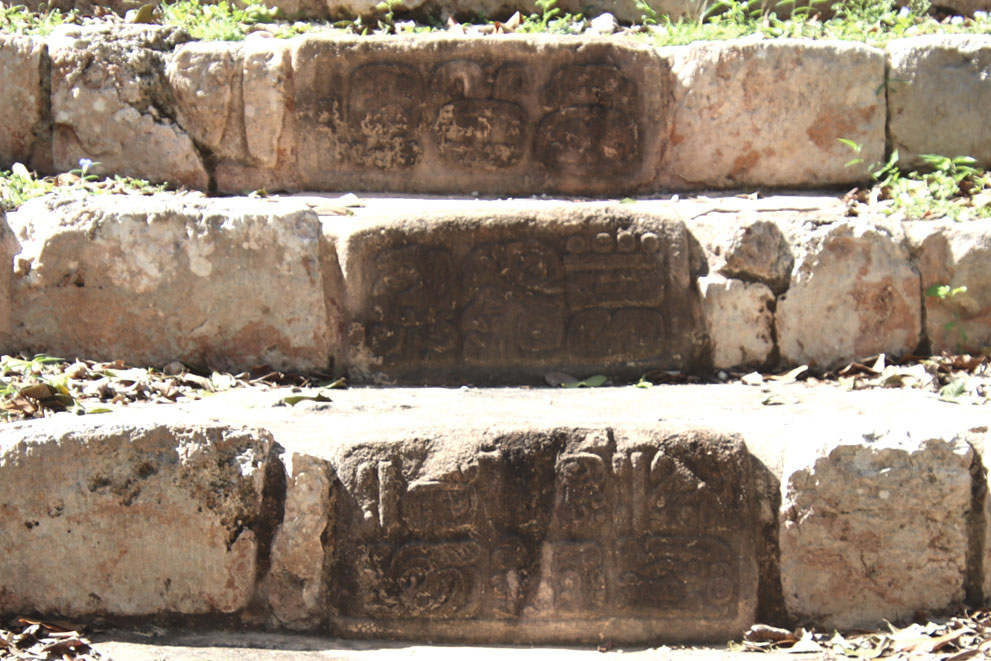
Caption: Oxkinto is home to several interesting examples of surviving epigraphy, including a remarkable, hieroglyphic staircase.
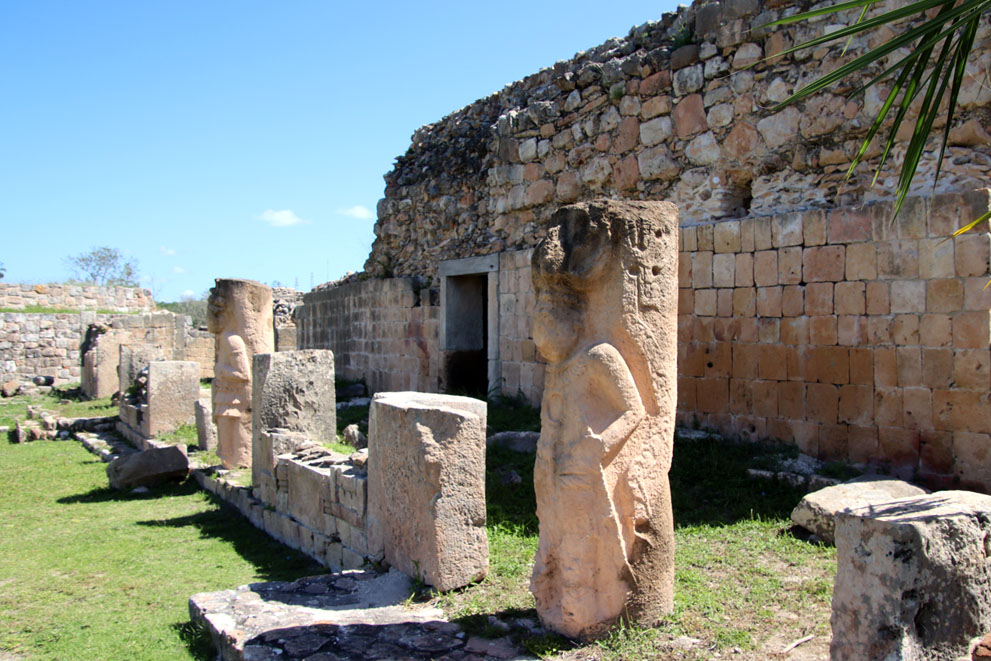
Caption: Ancient anthropomorphic monoliths, which once held up the ceiling of this Puuc-style structure, now remain only as silent centinels.
Combined with the lack of promotion, Oxkintok remains one of Yucatán’s least visited archaeological sites open to the public, something that Pedro Cruz, of Maxanú—the municipality where the site is located—says is an example of criminal neglect.
“Oxkintok and places like Paraiso and Granda, located here in Maxcanú, are amazing, and people should definitely visit. Even sites as grand as Uxmal and Kabah have nothing on us. But since the government has never prioritized our municipality, only a tiny trickle of visitors ever comes to visit”.
Given Oxkintok’s size and the fact that it is cared for by a single individual, looting has also become a problem, as the site’s perimeter consists of only a couple of parallel wires.
The lack of proper infrastructure was on full display at Oxkintok in 2025, when, during a partial solar eclipse, hundreds of people visited the site to observe the astronomical phenomena. Because the site lacks a proper parking lot, most visitors were forced to park farther away and walk the rest of the way.
“That day was especially embarrassing for us, we in Maxcanú, saw the eclipse as an opportunity, but the authorities really fumbled the ball and, as always, devoted all resources to other, more visited sites like Uxmal”, said Cruz.
The archaeological site of Oxkintok is particularly noteworthy for its origins dating back to the 8th century BCE, which are considerably earlier than those of most sites in the region.
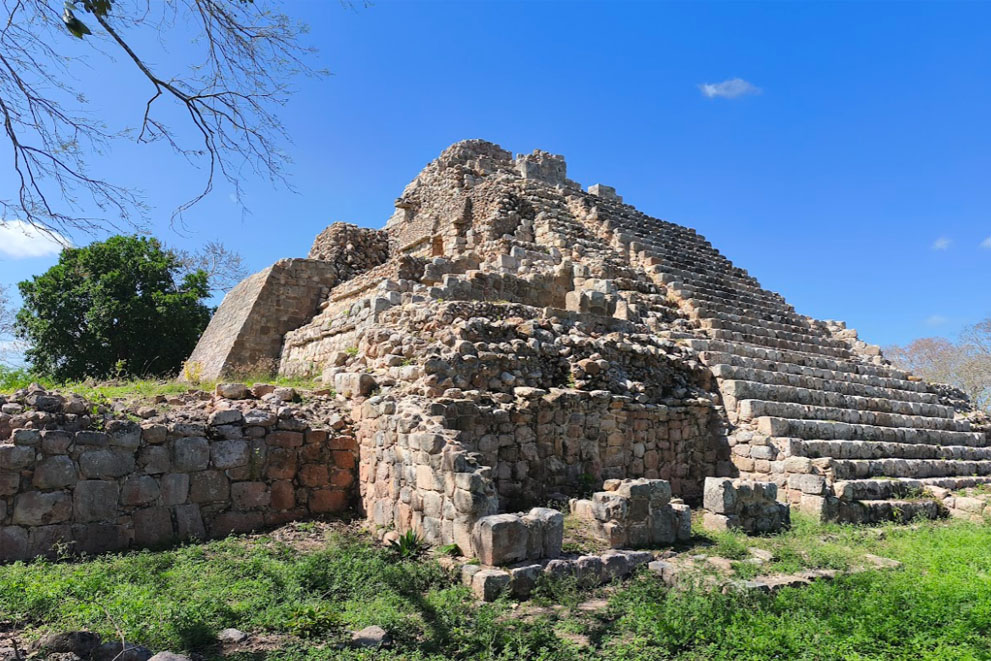
The site is also home to several unique structures, including its famous labyrinth, as well as highly detailed carved monoliths and a hybrid architectural style clearly influenced by Teotihuacan in central Mexico, the Petén from southern Campeche and Northern Guatemala, and the Puuc style, also found at sites like Uxmal.