

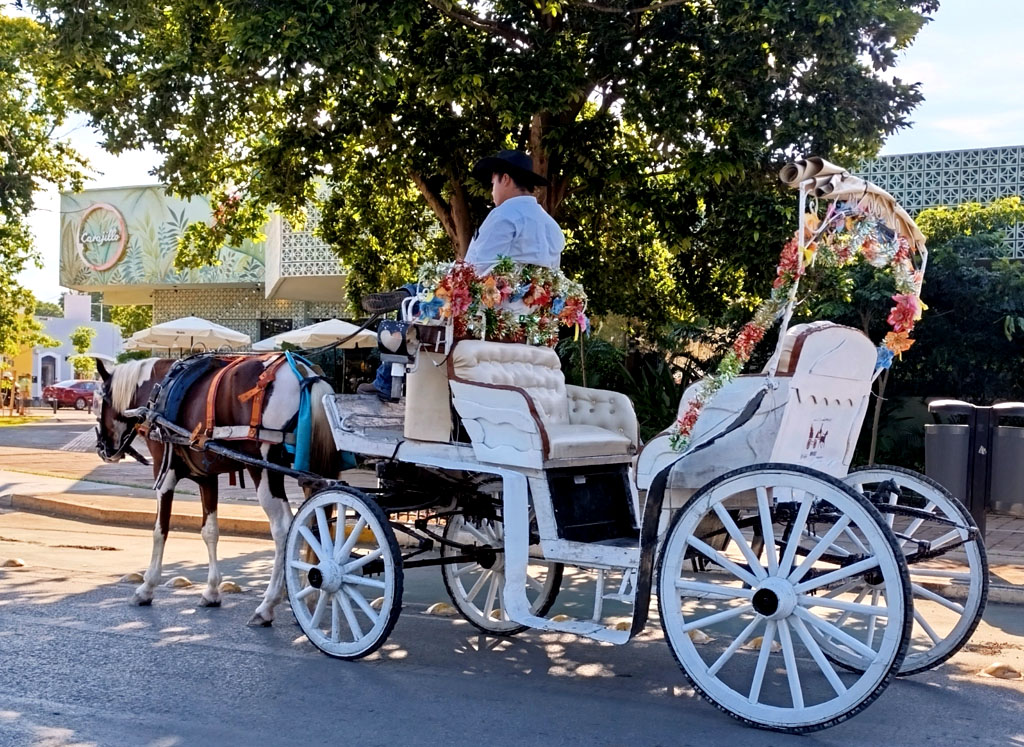
On a hot June afternoon in 2025, a horse collapsed in the middle of Calle 60, just steps from Mérida’s cathedral. The temperature that day reached 42 degrees Celsius — a heat index of 50 degrees in the punishing Yucatán sun. A video made rounds on social media showed the animal lying motionless on the asphalt while the carriage driver placed a small umbrella over its body in a futile attempt to provide shade. The horse would not get up.
This was not an isolated incident. It was merely the latest chapter in a controversy that has divided this colonial city for more than a decade. On one side are the caleseros — carriage drivers who have fed their families for generations by taking tourists on romantic rides through Mérida’s historic center and down the elegant Paseo de Montejo. On the other side are animal rights advocates who argue that forcing horses to haul heavy carriages through busy city streets in extreme heat amounts to nothing less than animal abuse.
Mérida’s city hall has attempted a compromise solution: electric carriages that would gradually replace the horse-drawn calesas. But this strategy has largely failed, leaving the city trapped between economic necessity and growing demands for ethical treatment of animals.
The Case Against Horse-Drawn Carriages
The arguments against traditional calesas are well-documented and, to many observers, compelling. Mérida’s climate is the central issue. The city experiences average annual temperatures near 80 degrees Fahrenheit, but from March through September, conditions become extreme. On the day the horse collapsed last June, the heat index reached 50 degrees Celsius — approximately 122 degrees Fahrenheit. For a horse working on hot asphalt, pulling a carriage loaded with passengers, the strain is severe.
Animal protection organizations have cataloged the harm. According to PetaLatino, which recently reactivated its campaign against calesas in Mérida, horses forced to work long hours under high temperatures suffer from exhaustion, dehydration, and public collapse. The organization states that horses develop recurring injuries to their legs and hooves from constant contact with hard surfaces. Their nostrils sit only a few feet above street level, meaning they inhale exhaust fumes from vehicles throughout their workdays.
The Caleseros’ Perspective
For the carriage drivers, the issue is not abstract. These are working-class men and women who have invested in their horses and carriages. Many come from families that have operated calesas for decades. The work is not a hobby — it is their primary source of income.
The caleseros argue that they care for their animals and take measures to protect them. Some provide shade umbrellas, as the driver in the June 2025 video attempted to do. Others say they offer water and rest breaks. They point out that the city has established regulations: horses are not supposed to work during the hottest hours of the day, typically between noon and 4 p.m.
The Electric Carriage Experiment
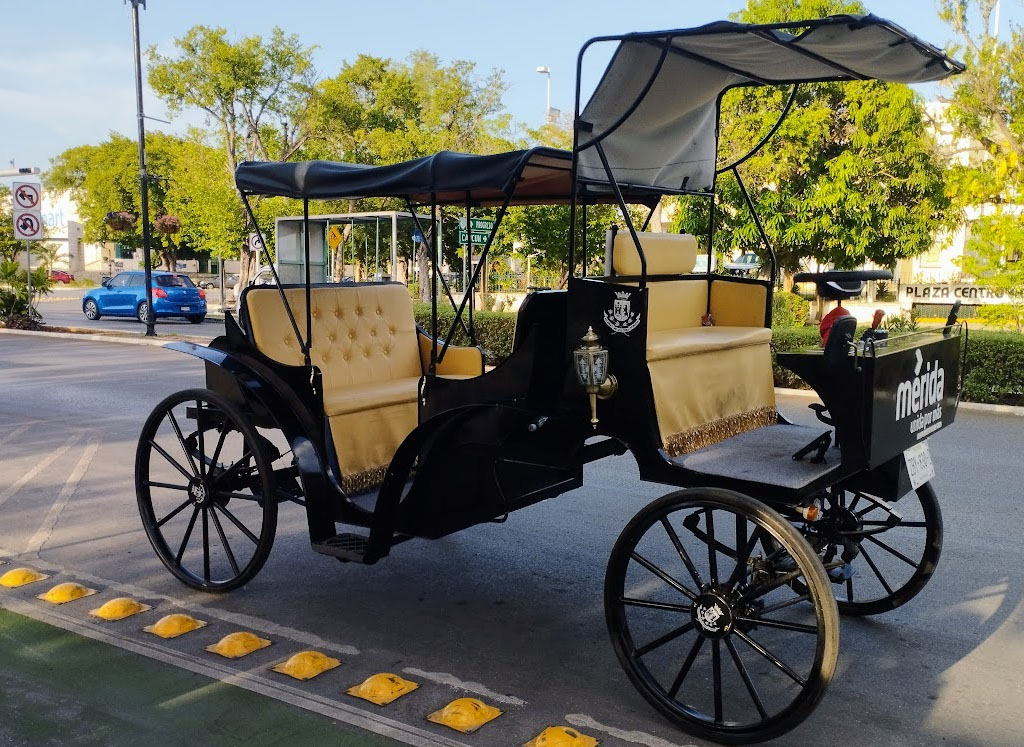
Recognizing the need for a path forward, Mérida’s Ayuntamiento (city council) in recent years promoted the introduction of electric calesas. These vehicles resemble traditional carriages but are powered by electric motors, eliminating the need for horses. The goal was straightforward: reduce the use of animals while offering a sustainable option for visitors and gradually transition away from horse-drawn carriages.
On paper, this seemed like a reasonable compromise. It would preserve jobs for drivers, maintain the aesthetic of horse-drawn carriages for tourists, and address animal welfare concerns. In practice, the strategy has largely failed.
The reasons are multiple. First, most tourists have shown insufficient interest in the electric carriages. For many visitors, the appeal of a calesa ride is precisely the experience of being pulled by a horse. The animal is part of the romance, the tradition, the photograph. An electric vehicle, no matter how nicely designed, does not provide the same experience. Tourists who want an electric tour can already take a golf cart or a bicycle taxi — the horse is the selling point.
There is also the reality that the cost of electric carriages is prohibitive for most caleseros. This is to do with the cost of electric vehicles themselves, as well as their constant need for maintenance and repairs.
The Debate Rages On
For animal rights groups, the electric carriage experiment is a well-intentioned failure that has become an excuse for inaction. PetaLatino has stated that these measures are insufficient as long as horse-drawn carriages continue to operate, and the organization insists on a total prohibition.
Activists argue that incremental approaches have been tried for years and have not improved conditions for the horses. Horses continue to collapse. Horses continue to work in extreme heat. Horses continue to develop leg injuries from pounding on asphalt. The regulations exist on paper but are not enforced, and the electric alternative has not been adopted at scale.
The group’s call to action asks local authorities to take “decisive measures” to eliminate horse-drawn carriages and replace them with cruelty-free alternatives. For PetaLatin, “decisive” means a ban, not another study, not another pilot program, not more unenforced regulations.