

As the Yucatán government pushes forward with plans for a second periférico to alleviate the capital’s worsening traffic congestion, civil engineers and urban planning experts are raising alarm bells over what they describe as a troubling lack of comprehensive studies and forward-thinking design.
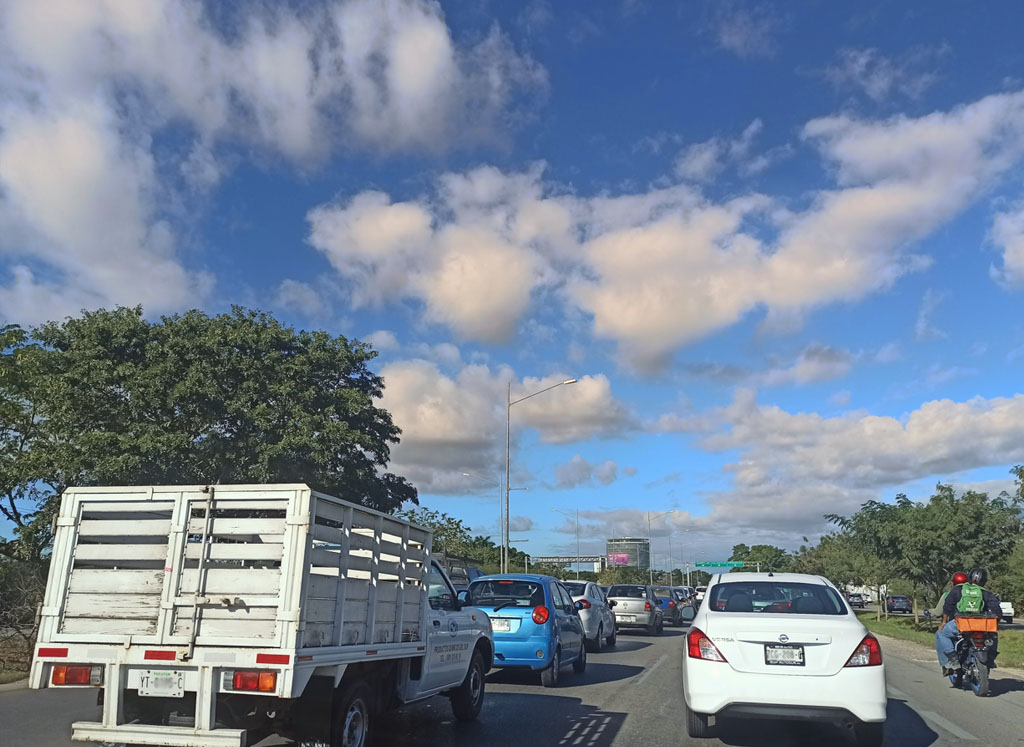
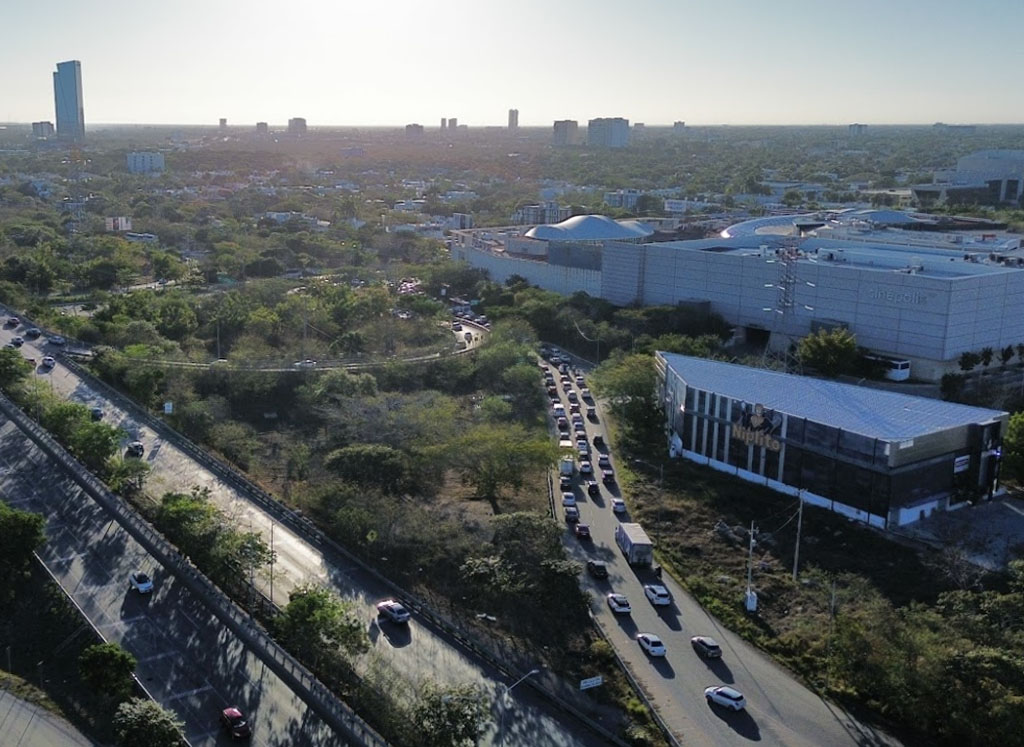
The existing Periférico “Lic. Manuel Berzunza,” a 50-kilometer outer ring road, was originally designed to handle 50,000 vehicles daily. Today, it supports between 120,000 and 150,000 vehicles each day — more than triple its intended capacity. For decades, motorists have endured daily chaos at key intersections such as the Motul bridge exit, where traffic grinds to a halt during morning, midday, and evening rush hours. Yet despite widespread recognition that the ring road has been overwhelmed, experts warn that simply building a second loop without rigorous analysis could prove counterproductive.
‘We Could Actually Make the Bottleneck Worse’
“Before undertaking any project, it is essential to carry out all corresponding studies,” says Germán Gabriel Euán Góngora, president of the College of Civil Engineers of Yucatán, in an interview at the organization’s Mérida headquarters. “We must analyze what will truly be feasible and beneficial for citizens, as well as the problems it could cause.”
Euán Góngora acknowledges that the current periférico has long been surpassed by demand. But he cautions that without a clear analytical framework, a new ring road could merely displace congestion rather than solve it. “A new periférico could reduce traffic on the current one,” he explains, “but in the long run, we could face the same congestion problems.”
Góngora points to the original Periférico as a cautionary tale. When it first opened, travel across the city took 15 to 20 minutes. Today, covering the same distance on surface streets takes up to 40 minutes — yet the Periférico still offers that original 20-minute commute, but only by forcing drivers to travel 22 or 23 kilometers instead of 11 or 12. “That means there is more vehicle use,” Euán Góngora notes. “We have to think about how to reduce the number of vehicles.”
The Trap of Induced Demand
The engineer’s concerns are backed by a well-documented urban planning phenomenon known as induced demand. Studies have consistently shown that adding highway capacity generates proportional increases in vehicle travel. Adding 10 percent more road lanes, for instance, typically produces a similar increase in traffic within just a few years. The phenomenon has played out in cities from Los Angeles to Mexico City, where new roads and expansions have repeatedly failed to deliver lasting relief from congestion.
Mérida’s numbers are stark. Between 2010 and 2020, the city’s population grew by 20 percent, surpassing one million residents. But vehicle ownership grew even faster — the local vehicle fleet expanded by 77 percent over the same decade, approaching nearly one million cars. According to the Global Traffic Scorecard 2023 by INRIX, Mérida drivers now lose an average of 19 hours per year to congestion, ranking the city among Mexico’s ten most congested.
A Project That Never Seems to Get Done
Euán Góngora also notes that the second periférico is not a new idea. “From some past administrations, it has been talked about, worked on, but not consolidated,” he says. If studies were conducted in earlier eras, he argues, they must be updated and projected into the future. “The safest thing is that a future study was done, but we have to see today’s reality.”
According to the federal Secretariat of Infrastructure, Communications, and Transport (SICT), the proposed project would actually consist of three bypasses forming a triangle outside the existing ring road, connecting Umán, Kanasín, and the port of Progreso, while also linking with the Maya Train. Federal officials have allocated 15 million pesos for initial drafting work. But critics say this falls short of the comprehensive planning required.
Public Transport as the Missing Piece
For Euán Góngora, the fundamental issue is not road capacity but vehicle dependency. “If we implement a good public transportation system, we could reduce the use of private vehicles, thus relieving pressure on the roads,” he states. He emphasizes the need for efficient entry and exit points on any new roadway, along with guaranteed safety standards.
This view aligns with recent public opinion. A survey of nearly 600 Mérida residents found that a majority prioritize improving existing road infrastructure and strengthening public transit over building a second periférico. Fifty-three percent of respondents expressed concern that a new ring road could encourage disorganized urban growth and prolong automobile dependency.
The World Bank has similarly recommended that improving public transportation infrastructure is essential for reducing congestion and promoting sustainable, equitable cities — with emphasis on non-motorized options like bike lanes and demand-management policies, including a greater focus on working from home.