

Mexican environmental authorities have concluded a large operation against the illegal wildlife trade. The operation took place March 11-15 across seven southern states. The Federal Attorney for Environmental Protection (Profepa) reported the rescue of 138 wild animals.
The operation covered Chiapas, Oaxaca, Quintana Roo, Yucatán, Campeche, Veracruz, and Tabasco. It involved 45 Profepa inspectors and 150 security personnel from the National Guard, the Defense Ministry, the Navy, and state and local police forces.
Authorities set up checkpoints and conducted highway patrols. They inspected more than 300 vehicles, boats, and public transport units along key routes. In total, patrols covered at least 234 kilometers.
Where the Animals Were Found
The seized animals included species of songbirds, ornamental birds, parrots, macaws, reptiles, arachnids, and mammals. The majority of the animals were found in Yucatán. There, authorities conducted nine inspections in and around Mérida following citizen complaints. They seized 103 animals that people were keeping or selling without the required permits from the Environmental authorities.
In Yucatán, the seized wildlife included parrots, a white-tailed deer, a sea turtle, a collared peccary, and several reptiles. One local news outlet reported that this seizure accounted for 74 percent of all animals rescued during the operation, highlighting the state as a hotspot for illegal wildlife trade.
In the state of Oaxaca, authorities found a different kind of illegal activity. At the Margarita Maza de Juárez market, 20 bottles of mezcal containing preserved animals were confiscated. They also rescued 34 live animals, including tarantulas, scorpions, and snakes. In the town of Zaachila, they rescued a crested caracara.
In Chiapas, the focus was on prevention. Officials patrolled protected natural areas like the La Encrucijada and Montes Azules biospheres. In one case, a spider monkey (Ateles geoffroyi) was voluntarily handed over. After a medical check, it was returned to its habitat. Four scarlet macaws were also transferred to a special conservation management unit (UMA) for protection.
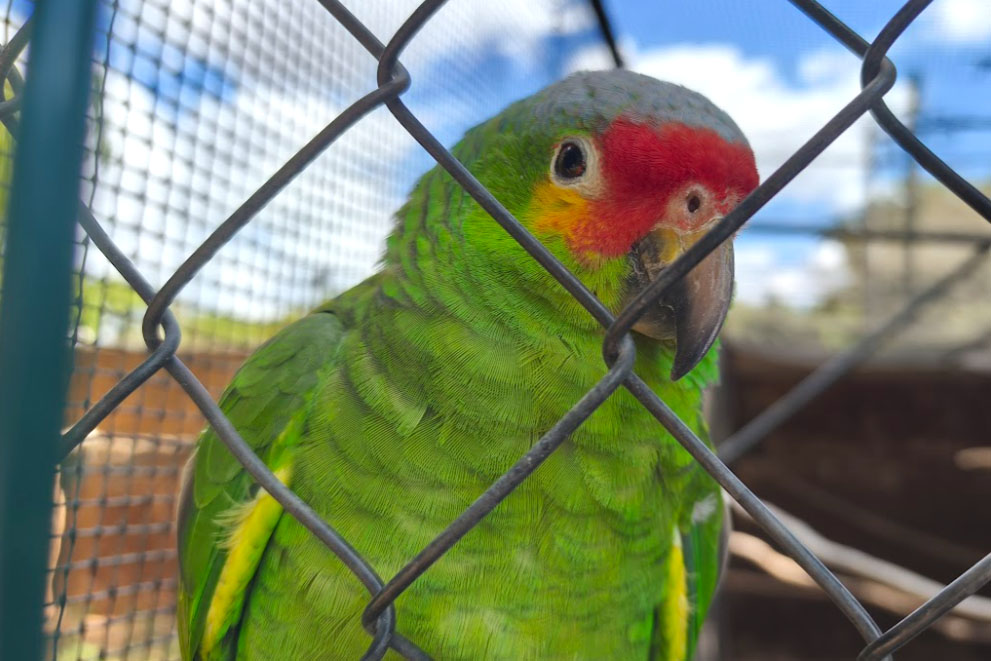
In Campeche, authorities responded to three citizen complaints, which led to the seizure of a coatimundi (Nasua narica).
The Broader Context of Wildlife Trafficking
The illegal trade in wild animals is a persistent problem in Mexico. A separate operation in Morelos in January 2026 resulted in the seizure of 107 wild birds being sold illegally at a market. In that case, two people were handed over to federal prosecutors.
The issue is not limited to public markets. According to the environmental group Proyecto Santa María, wildlife trafficking in Yucatán also happens through social media. The group estimates that around 500 wild animals are captured each day across the state’s 106 municipalities. They say 80 percent are songbirds, while the rest are larger animals like deer and monkeys. Often, the mothers of species like monkeys and felines are killed so their young can be sold as exotic pets.
Penalties and Process
In Mexico, the illegal trafficking of wildlife is a federal crime. It can be punished with prison sentences of one to nine years and fines up to 700,000 pesos (roughly US$ 40,000)
The animals seized in the March operation were taken to UMAs for medical evaluation. According to Profepa, the goal is to reintegrate them into their natural habitat whenever possible