

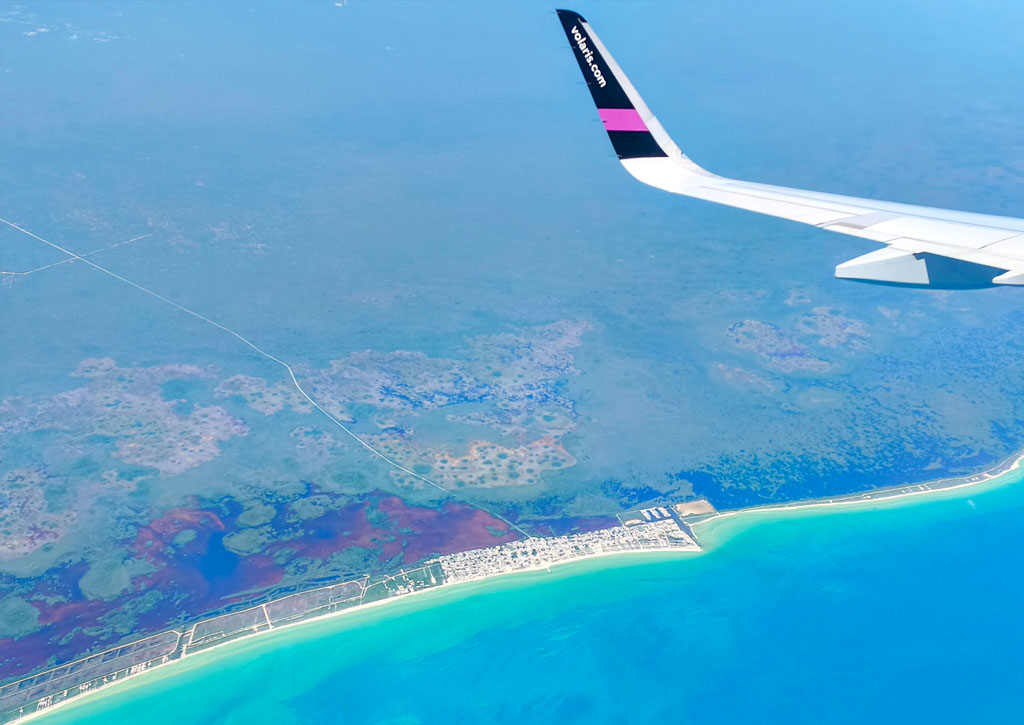
For travelers, families, and businesses in Yucatán and Baja California, the new Volaris direct flight between Mérida and Tijuana is more than a new route; it is a link that makes the country feel smaller and more accessible.
The flight began operating on June 1, 2026, and will operate four times a week, connecting the southeastern and northwestern corners of Mexico.
For the people of Yucatán, this means reaching the northern border and the United States in a matter of hours. For those in Baja California, it opens a direct door to the culture, history, and growing economy of the Yucatán Peninsula.
A Route Restored and Expanded
The Mérida-Tijuana connection is not entirely new. It first launched in March 2019 and operated regularly until January 2024, with an average of two weekly flights. The pandemic temporarily disrupted service, and the route was eventually suspended.
Its reactivation represents a significant upgrade: Volaris now offers four weekly frequencies, up from the previous two. Flights depart Tijuana at 8:00 a.m. on Mondays, Wednesdays, Fridays, and Saturdays, with the return leg leaving Mérida at 2:00 p.m. on the same days.
The route is operated with Airbus A320 aircraft, each with a capacity of 180 passengers. With this addition, Yucatán now boasts 13 active domestic routes, reinforcing the Mérida airport’s position as the eighth busiest in Mexico.
A Bridge for Migrant Families
For many families in Yucatán, this flight is about something more tangible than tourism statistics. Yucatán has a long history of migration to the United States, and a significant portion of that community has settled in California and the broader U.S. West Coast.
For years, reaching family members in places like Los Angeles or San Diego required complex itineraries with layovers in Mexico City or Guadalajara, often turning a day of travel into an exhausting two-day affair. The direct flight to Tijuana changes that equation dramatically.
Tijuana is not just a destination in itself; it is the gateway to the California border. The Cross Border Xpress (CBX) pedestrian bridge connects the Tijuana airport directly to San Diego, allowing passengers to walk into the United States in minutes.
This makes the Mérida-Tijuana route a practical, efficient corridor for family reunification. A family member from a small town in Yucatán can now board a plane in Mérida in the afternoon and be with relatives in Southern California by evening.
Governor Joaquín Díaz Mena framed the route in these terms, describing air connectivity as “a matter of social justice” because of its direct impact on migrant families.
Economic Integration and the Flow of Commerce
Beyond family connections, the route strengthens economic ties between two of Mexico’s most dynamic regions. Baja California, with its manufacturing and export-oriented economy, and Yucatán, with its thriving tourism and service sectors, have long operated in separate commercial spheres. This flight changes that.
For business travelers, the ability to move between Mérida and Tijuana in a single day, the flight time is approximately four hours and fifteen minutes, which opens new possibilities for trade, investment, and collaboration.
Companies in Yucatán can more easily explore opportunities in the northern industrial corridor, while Baja California-based firms can tap into the growing Yucatán market.
The route also enhances Yucatán’s connectivity with San Diego, one of the principal destinations for Mexican residents and a major U.S. economic hub. This creates a direct link between the Yucatán Peninsula and a major U.S. economic hub, facilitating not just tourism but also commercial exchange and investment.
The economic impact is also felt locally. Each new route generates employment in hotels, restaurants, travel agencies, and transportation services. The increased flow of visitors translates into higher occupancy rates, more restaurant reservations, and greater demand for tour operators.
As Darío Flota Ocampo, Yucatán’s Secretary of Tourism Promotion, noted, while other destinations are seeing flight reductions, Yucatán continues to grow.
Tijuana – Merida Tourism: A Two-Way Street
Tourism is the most visible benefit of the new route. For travelers from Baja California and the U.S. West Coast, Mérida offers something entirely different from the beaches of Cancún or the desert landscapes of the north.
The city is renowned for its colonial architecture, vibrant cultural scene, and proximity to Maya archaeological sites. The route makes it easier for visitors from Tijuana and San Diego to explore Yucatán’s pueblos mágicos, its gastronomy, and its rich historical heritage.
Conversely, the route also allows Yucatecans to discover the attractions of Baja California, the wine country of Valle de Guadalupe, the beaches of Ensenada, and the urban energy of Tijuana itself. This two-way flow of tourists stimulates both regional economies and fosters a greater appreciation of Mexico’s cultural diversity.