

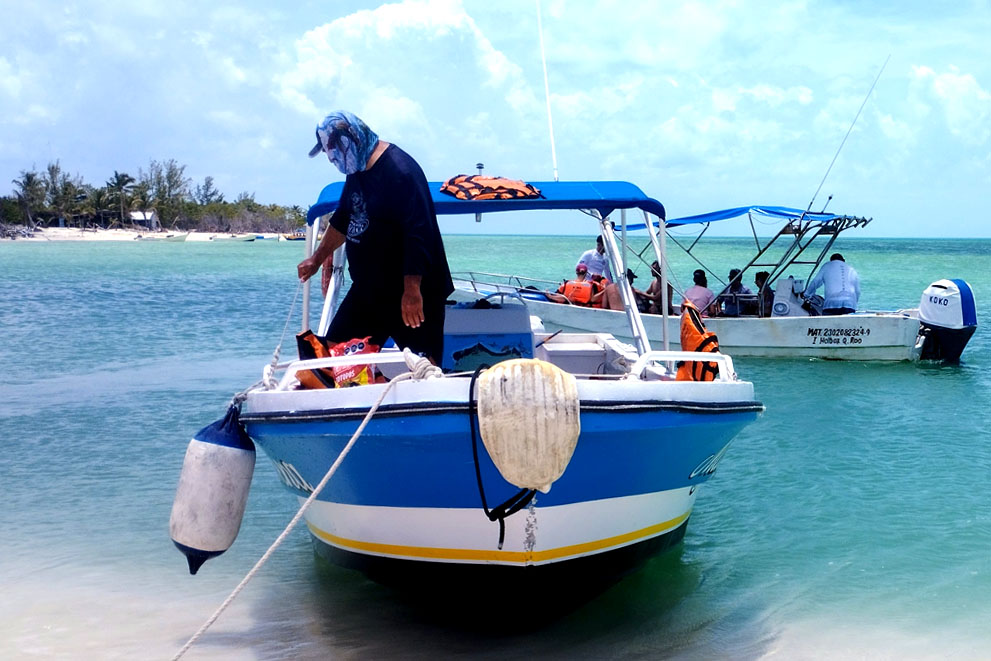
As tourists begin to pour into Holbox for Easter holidays, or Semana Santa, as the holiday is known in Yucatán, the tiny Island of Holbox comes under tremendous pressure.
Located off the northern coast of the Yucatan Peninsula, Holbox forms part of the Yum Balam Natural Reserve, a protected area that encompasses lagoons, mangroves, and dunes, providing critical habitat for threatened species, including manatees, whale sharks, sea turtles, and horseshoe crabs. But rapid, often illegal development has placed these ecosystems in jeopardy.
Holbox, A Boom Without Limits
The transformation kicked off around 2017, when the island’s popularity on social media platforms like Instagram triggered an unprecedented surge in visitors. “There were not enough hotel beds to accommodate all the people who wanted to visit the island,” said Alejandro Cañedo, a hotel owner and president of Fuerzas Vivas, a local organization of entrepreneurs and environmentalists. “Within three years, the number of beds tripled”.
Today, Holbox hosts approximately 150 hotels, 6,000 employees, and 130 golf carts—the island’s primary mode of transportation. Just two decades ago, fewer than 2,000 residents lived on the island, with only a dozen small hotels serving scientists and environmentally conscious visitors.
The real estate boom has proceeded despite the island’s protected status. After the government designated Holbox as a natural reserve in 1994, development was legally restricted to a designated area called Isla Chica. However, investors acquired dubious land titles even within protected zones—a controversy that became known nationally as the “Holbox scam”—and the reserve’s regulatory framework was not fully published until 2018, after decades of legal ambiguity.
Infrastructure Overwhelmed
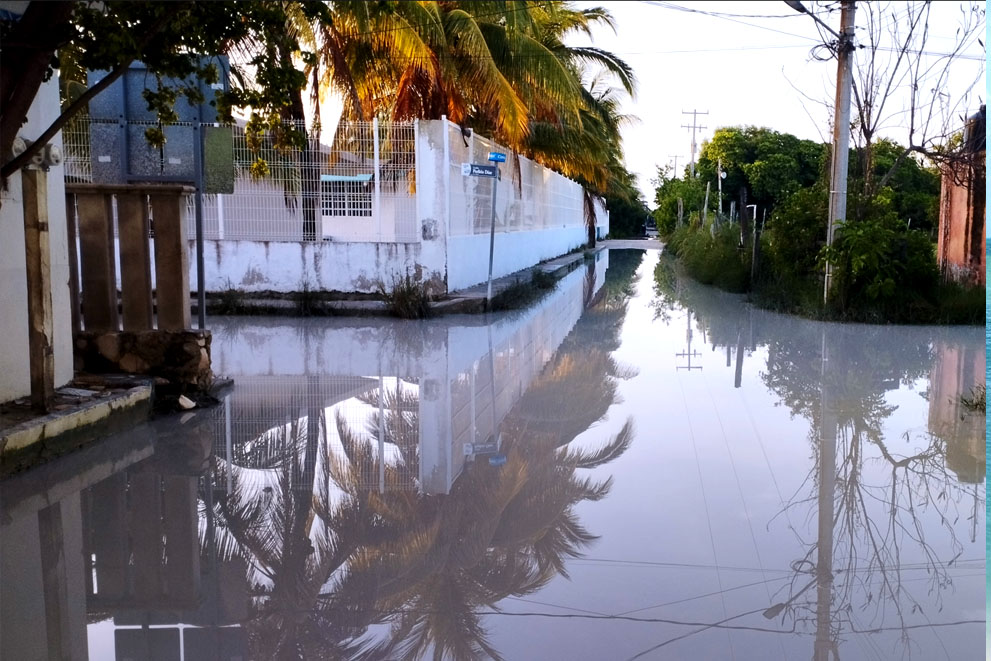
The island’s infrastructure has failed to keep pace with growth, creating environmental and public health hazards. According to data from the Mexican Center for Environmental Law (CEMDA), Holbox’s sewage treatment plant was designed to serve 1,500 residents—a fraction of the more than 18,000 visitors and floating population that now occupy the island during peak seasons.
As most properties rely on septic systems rather than centralized sewerage, environmental groups warn that wastewater is infiltrating the groundwater and threatening the Mesoamerican Reef System, one of the largest barrier reefs in the world.The garbage crisis is equally dire. An estimated 90,000 metric tons of waste have accumulated on the island, according to environmental organizations, creating risks of water table contamination and threatening the Yum Balam ecosystem. The municipal transfer site has “completely collapsed and operates at maximum capacity,” Lázaro Cárdenas Mayor Nivardo Mena Villanueva acknowledged in February 2026, estimating that 40,000 to 50,000 tons of garbage currently sit in the facility.
Wildlife in Decline at Holbox
Conservationists report alarming declines in the region’s iconic marine species. In 2009, researchers counted 400 whale sharks in the waters around Holbox. By 2023, fewer than a dozen were observed, according to biologist Emanuel Mimilla of the local NGO Pronatura.
“With tourists around, the whale sharks sometimes stopped eating,” Mimilla told Mongabay, explaining that the animals exhibit defensive behavior—turning their backs to intruders—when disturbed by boat traffic. A 2016 study in the Journal of Sustainable Tourism documented crowding and physical contact between tour boats and whale sharks in the area, underscoring longstanding concerns about tourism pressure on the species.
Sea turtles have also been affected. Melania López, coordinator for Pronatura’s sea turtle conservation program, said she observed a “drastic decrease” in nesting activity in Isla Chica, with animals deterred by noise and artificial light from beachfront development.
Fires and Illegal Construction
Environmental activists face threats and intimidation. In September 2025, a fire burned 670 hectares—approximately 941 soccer fields’ worth of land—in the Punta Mosquito area of Yum Balam, outside the typical fire season. Environmental organizations, including the Mexican Center for Environmental Law and Grupo Ecológico del Mayab, have suggested private real estate interests may have been behind the blaze, which fragmented the ecosystem and destroyed mangrove habitat.
“Managing a natural reserve with people living in the middle is never easy,” one park ranger from Mexico’s National Commission for Protected Areas (CONANP) told Mongabay, speaking anonymously due to a lack of authorization to speak with media. “But the real estate fever I have experienced here over the last few years is incomparable to any other reserve I have been to before. Laws are very difficult to enforce when so much money and powerful interests are at stake”.