

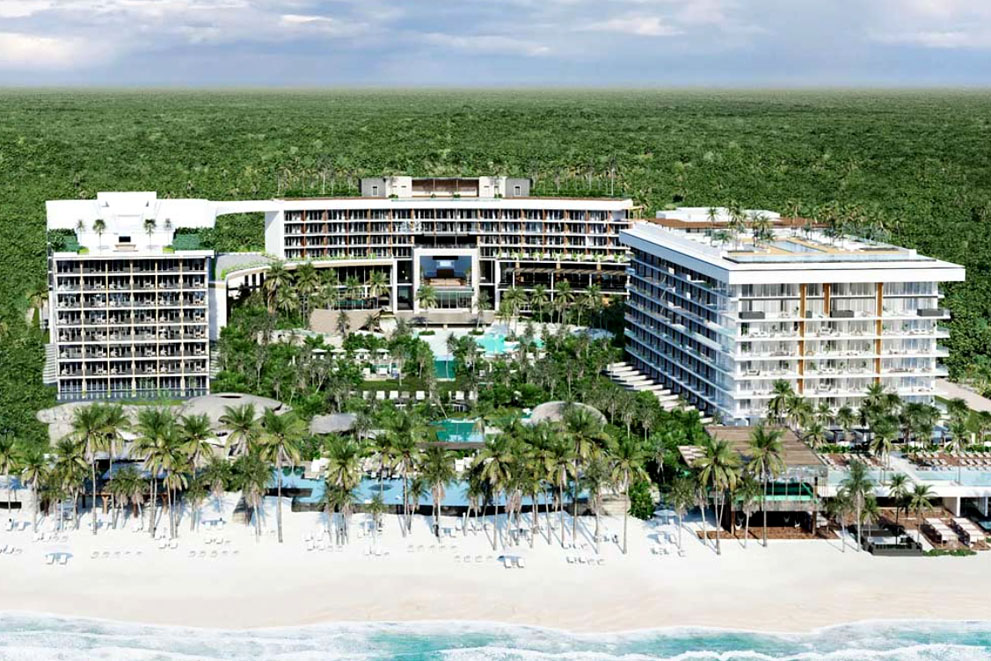
Mexico’s environmental agency has approved the construction of a new 926-room hotel in Playa del Carmen, adding to an already saturated market where small hotel owners are struggling with falling room rates despite strong occupancy.
The Moxché Club & Resort will be built north of Playa del Carmen along the Xcalacoco-Punta Esmeralda coastal corridor. The project represents an investment of more than 1 billion pesos, or approximately $56 million, through a trust managed by Mifel Bank.
The hotel’s design includes 20 residential buildings arranged in two large horseshoe shapes facing the sea. According to the environmental impact study, these structures will surround common areas, including gardens, swimming pools, and an artificial lake that serves as a central feature. Restaurants, cafes, jewelry shops, and convenience stores will surround the lake area.
The environmental permit was first requested in 2013. The lengthy approval process was due to administrative proceedings initiated by the Federal Environmental Protection Agency (Profepa), according to local news reports.
Industry Context
The new development comes at a challenging time for the Riviera Maya’s hospitality sector. The region currently has approximately 49,000 hotel rooms, most of which are located in Playa del Carmen.
While occupancy rates remain high, exceeding 85 percent in February and reaching nearly 90 percent during peak periods, hotel owners report that average nightly rates have dropped significantly.
Offner Arjona, president of the Association of Small Hotels of Playa del Carmen, said the average nightly rate has fallen from $150 ten years ago to between $55 and $60 today.
“February is historically a good month. We are above 85 percent and very close to 90 percent occupancy, but there has been a decrease in the average rate,” Arjona said in a recent statement.
Competition from Vacation Rentals
Hotel operators point to the rapid growth of vacation rental platforms as a primary cause of falling rates. According to municipal treasury data, Playa del Carmen now has approximately 13,000 housing units designated for vacation rentals.
By comparison, the city’s small hotels account for roughly 3,000 rooms, with the total formal hotel inventory estimated at between 7,000 and 8,000 rooms in the downtown area.
Arjona has called on authorities to create equal conditions for all hospitality businesses. He noted that formal hotels must comply with federal, state, and municipal regulations, including payments to Social Security, the housing fund, payroll taxes, and civil protection permits—obligations that many vacation rentals do not face.
“The playing field is not level,” Arjona said, estimating that the regulatory burden on hotels is roughly four times higher than on vacation rental units.
Safety and Sargassum
Industry representatives also cite safety concerns and sargassum as factors affecting the destination’s competitiveness. Economist Gabriel Urzúa Morín said the Tourism Promotion Council’s disappearance has weakened marketing efforts for the region, leaving hotels dependent on their own business development.
Despite these challenges, projections for the upcoming Easter holiday period remain positive. Business leaders expect occupancy to exceed 80 percent during the vacation weeks.
The new Moxché Club & Resort will be located near existing developments, including the Luis Donaldo Colosio Murrieta and Nicte-Ha neighborhoods, where the Meliá Paradisus hotel currently operates.