

The K’íiwik: Maya World Tourism Fair, focusing on sustainable tourism, is set to kick off.
The fair will take place from Wednesday, June 3, to Friday, June 5, at the Yucatán Siglo XXI International Convention Center in Mérida. The event aims to promote a community-based tourism model that respects cultural heritage and the environment.
The fair comes at a time when the federal and state governments in Yucatán are embroiled in several conflicts with indigenous peoples over the control of archaeological sites. The most embarrassing of these is the recent two-week closure of Chichén Itzá, and the years-long (and counting) closure of Mayapán and Balankanché.
The fair’s name comes from the Maya word meaning “market” or “meeting.” This is fitting, as the event connects buyers and sellers around the Maya region’s many assets. After more than a decade, this important gathering has returned to Yucatán, solidifying the area’s role as a leader in cultural preservation and sustainable economic development.
A Multi-Destination Tourism Approach
The 2026 fair brings together the five countries that share the Maya legacy: Belize, El Salvador, Guatemala, Honduras, and Mexico. On the Mexican side, the states of Campeche, Chiapas, Quintana Roo, Tabasco, and Yucatán are all participating. This collaborative effort marks a move toward promoting the region as an integrated destination.
The central idea is to create a resilient tourism ecosystem that benefits local people. For international visitors, the focus is on authentic experiences, such as birdwatching, hiking, cooking with traditional chefs, and beekeeping tours. These activities are designed to show that travel can be a force for learning and positive change.
K’íiwik is the only global platform focused specifically on cultural, community, and sustainable tourism. By uniting these nations, organizers hope to create a competitive multi-destination brand. The message to international visitors is clear: the Mundo Maya is accessible, close-knit, and culturally rich.
UNESCO’s Focus on Community Tourism
In the lead-up to the event, UNESCO has shown interest in this area before, recently recognizing Maya Ka’an—a community tourism destination in Quintana Roo—for its sustainable approach. That project includes 90 community experiences across 76 Maya villages.
Panel sessions are scheduled to tackle critical topics related to the region’s tourism growth. These include the challenges of regional air connectivity, strategies for fair trade within community networks, and how to position the Mundo Maya as an integrated and competitive product.
The Herencia Viva Artisan Showcase
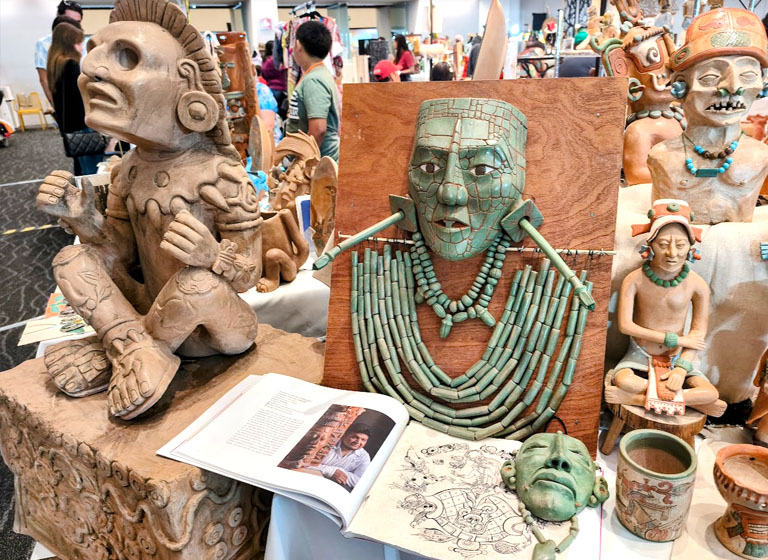
While the conference sessions ran, the convention center’s foyer opened a free public exhibition.
Called Herencia Viva (Living Heritage), the artisan showcase was coordinated by the Yucatecan Institute of Entrepreneurs and the Community Tourism department.
This space offers visitors a hands-on look at the region’s crafts. Access to this exhibition is free for everyone. Meanwhile, business activities in other halls are badge-controlled.
Tourism, Business, Alliances, and Future Plans
More than 200 international buyers and 100 companies from nine destinations are expected to attend. June 4 will focus on signing strategic alliances, followed by the event’s official closing and the announcement of the host for the next edition.
On June 5, the final day, participants will go on familiarization tours organized by the destinations. These tours let international buyers experience the area’s natural and archaeological richness firsthand.