

The number of active immigration cases handled by Mexico’s federal public defender’s office in Yucatán quadrupled in just seven months last year — and demand keeps climbing.
From May to December 2025, caseloads at the Instituto Federal de la Defensoría Pública grew from 56 to 286 open files, according to Lucero Gutiérrez de la Cruz, the agency’s legal adviser specializing in human mobility. By March of this year, another 54 new cases had already been opened. That puts the office on pace to far exceed last year’s totals.
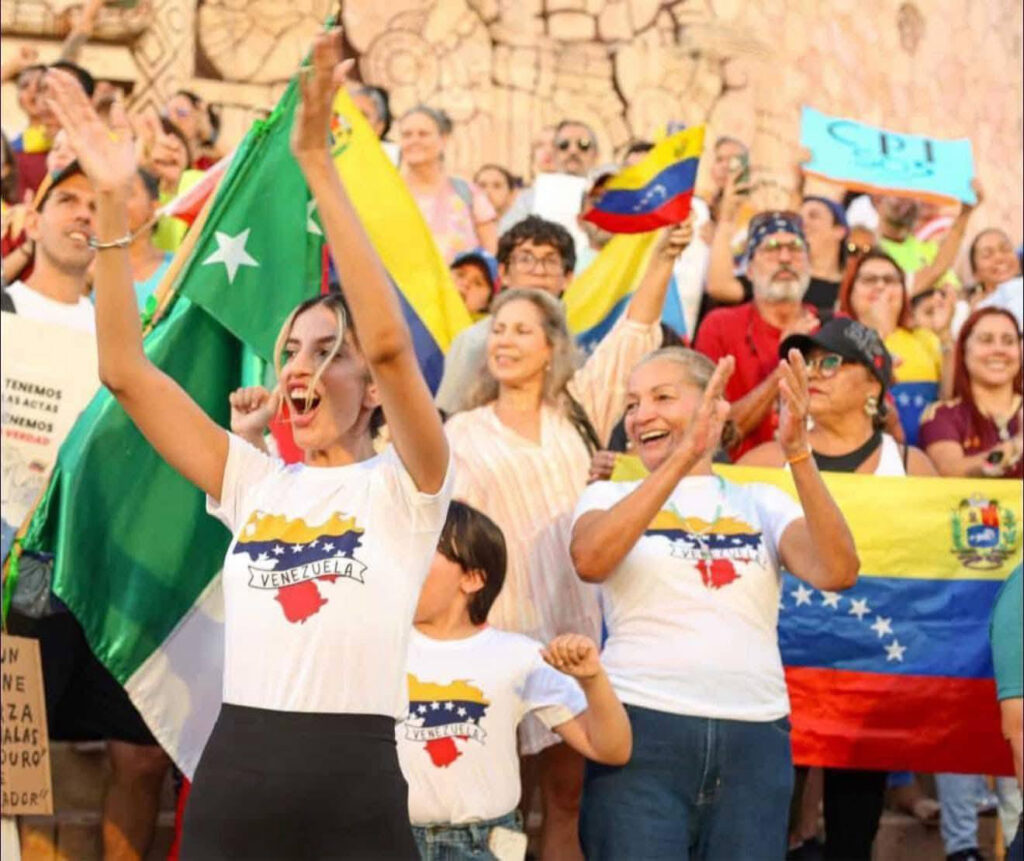
The surge mirrors a broader regional trend. Cubans and Venezuelans make up the majority of those seeking help in Yucatán, though the office also handles cases from Pakistan, the Democratic Republic of the Congo, and other countries. Most arrive looking to regularize their immigration status — either renewing an expired document, applying for humanitarian protection, or seeking residency through family ties.
“We attend to people of any nationality,” Gutiérrez told Diario de Yucatán. “Many arrive needing to regularize their stay in the country for various reasons. Some face problems in their home countries, have been victims of crime, suffer political persecution, or require medical care they can’t get where they’re from.”
She added that the agency’s services are free. Staff helps migrants prepare paperwork and accompanies them to appointments with Mexico’s National Migration Institute and the Mexican Commission for Refugee Assistance.
The broader context for the Yucatán numbers is a migration crisis playing out across the hemisphere. As of late 2025, an estimated 6.9 million Venezuelans were living outside their country, scattered across Latin America, the Caribbean, and beyond. Cuba, meanwhile, has seen its own accelerating exodus — Brazilian immigration data showed nearly 35,000 Cuban asylum applications in the first ten months of 2025 alone, nearly double the full-year 2024 figure.
For many of those migrants, the U.S. has become harder to reach. Stricter border enforcement since early 2025 — including the cancellation of scheduling programs for asylum seekers and an increase in deportation flights — has pushed flows toward alternative destinations. Mexico, including Yucatán, has absorbed some of that redirection. Cuba and Venezuela rank among the top source countries for asylum seekers in Mexico, alongside Haiti.
Yucatán has historically had a smaller foreign-born population than tourist-heavy parts of Mexico. A look at the state’s demographics from earlier years showed Cubans already ranking as the largest foreign-born group, ahead of Guatemalans, Canadians, and Italians. That composition appears to have shifted further, with geopolitical pressures driving more people from crisis-hit countries toward the Peninsula.
Gutiérrez said political and social conditions in Cuba and Venezuela have pushed many to seek refuge in Mexico, which she described as offering a relatively favorable environment for newcomers. International conflicts, she added, have also prompted arrivals from more distant countries.
For those who do arrive, Yucatán’s legal landscape offers several paths to status. Those with expired visas can seek renewal. Those fleeing violence or persecution can apply for humanitarian protection. Those with Mexican family members — including partners and children born in Mexico — can pursue residency through family unification.
“Migrating is not a crime, and we are here to defend their rights,” Gutiérrez said.
The caseload growth at the public defender’s office reflects a system under increasing stress. The agency’s Mérida staff tracks each person’s file through the process — drafting documents, verifying requirements, and confirming appointments — to ensure no case falls through the cracks.
Fast Facts
- Active immigration cases handled by Yucatán’s federal public defender grew from 56 in May 2025 to 286 by December 2025 — a roughly 400% increase.
- Another 54 cases were opened between January and March 2026.
- Cubans and Venezuelans make up the largest share of those seeking legal assistance; Pakistan and the Democratic Republic of the Congo are also represented.
- Services provided by the Instituto Federal de la Defensoría Pública are free of charge.
- Pathways to legal status include expired-visa renewal, humanitarian protection, and family unification.
- As of late 2025, an estimated 6.9 million Venezuelans were living outside Venezuela, making it one of the world’s largest displacement crises.
- Stricter U.S. immigration enforcement since early 2025 has redirected migration flows toward Mexico and other Latin American destinations.
Sources: Diario de Yucatán, Cuba Headlines, R4V (Regional Inter-Agency Coordination Platform for Refugees and Migrants from Venezuela)