

Yucatán is barely into April, and the state has already recorded as many snakebite cases as it did in all of 2025. Health officials and wildlife experts say the worst is still ahead.
Federal health authorities have documented 14 snakebite cases in Yucatán so far this year, according to data from Mexico’s National Epidemiological Surveillance System. That figure matches last year’s total, and it only covers through the third week of March. Five of those cases occurred in a single week, between March 8 and 14.
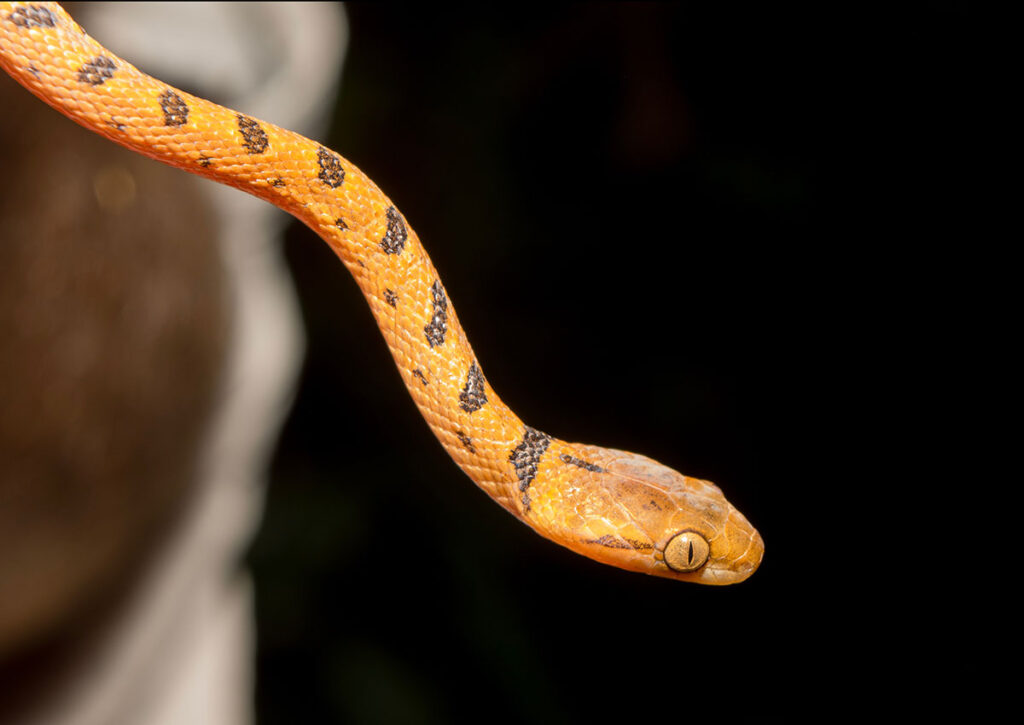
Three additional bites were reported over the final weekend of March, though those had not yet been folded into the official statistics as of early April. On March 27, a 55-year-old woman was bitten by a rattlesnake in Cabichén, a small community near Tizimín in eastern Yucatán. Two days later, an 11-year-old girl was airlifted by helicopter to a Mérida hospital after a rattlesnake bit her in Emiliano Zapata, another Tizimín-area settlement. A 13-year-old boy was also treated after being bitten by a nauyaca — a pit viper — while bathing near Chacsinkín, in the south of the state.
Of the 14 officially recorded cases this year, four involved rattlesnake bites. Ten were attributed to other species. Thirteen of the victims were male.
Snakes love the heat
What makes this year’s numbers’ pace striking is the timing. The hottest months in Yucatán — when temperatures routinely climb above 40°C (104°F) before the rains arrive — still lie ahead. Snakes are cold-blooded and regulate their body temperature by their environment, which means they become more active and range farther as temperatures rise. A study published in the journal GeoHealth found that for every 1 °C increase in temperature, snakebite incidents rose by roughly 6%. Yucatán’s brutal dry-season heat, which typically peaks between April and June before the summer rains begin, creates precisely the conditions that lead to more encounters between humans and snakes.
Expanding development along the jungle’s edge is another factor. Pedro Nahuat Cervera, a herpetologist and director of Ekuneil Península de Yucatán, a group focused on amphibian and reptile conservation, said that as people build homes and clear land deeper into forested areas, they move further into territory snakes call home. The snakes, he explained, don’t seek out humans — they’re defending themselves when cornered or accidentally encountered.
“Snakes don’t bite us because we’re their prey,” Nahuat Cervera told Diario de Yucatán. “They’re simply defending themselves.”
There are five venomous snake species in Yucatán: the rattlesnake (cascabel), the huolpoch (Yucatecan cantil), the coral snake (coralillo), and two species of nauyaca, or fer-de-lance. According to the expert, only three of those — the rattlesnake, the cantil, and the coral snake — are found near Mérida. The two nauyaca species have not been documented close to the capital.
Deaths from snakebite are rare in Yucatán, Nahuat Cervera said, but permanent injury is a real risk if treatment is delayed. He recommends getting to a hospital or health clinic within two hours of being bitten, as health centers around the state carry antivenom. He strongly advises against trying to kill or handle a snake, noting that a significant share of bites happen precisely at that moment.
Snake sightings in urban areas have also become more common in recent years as Mérida’s suburbs push into forested land. Wildlife authorities recommend calling emergency services — firefighters, police, or civil protection — rather than attempting to remove the animal yourself.
Fast Facts: Snakebites in Yucatán
- Yucatán has recorded 14 snakebite cases through late March 2026, matching the full 2025 total
- Five cases were reported in a single week (March 8–14)
- 13 of the 14 victims were male
- 4 cases involved rattlesnake (cascabel) bites; 10 involved other species
- 3 additional bites from the final weekend of March were not yet in official totals
- Yucatán has 5 venomous species: rattlesnake, cantil (huolpoch), coral snake, and 2 fer-de-lance varieties (nauyacas)
- The peak heat season (April–June) has not yet begun
- Seek medical attention within 2 hours of any bite; most health clinics carry antivenom
- Do not attempt to kill or handle a snake — call firefighters, police, or civil protection
Sources: Diario de Yucatán, Sistema Nacional de Vigilancia Epidemiológica