

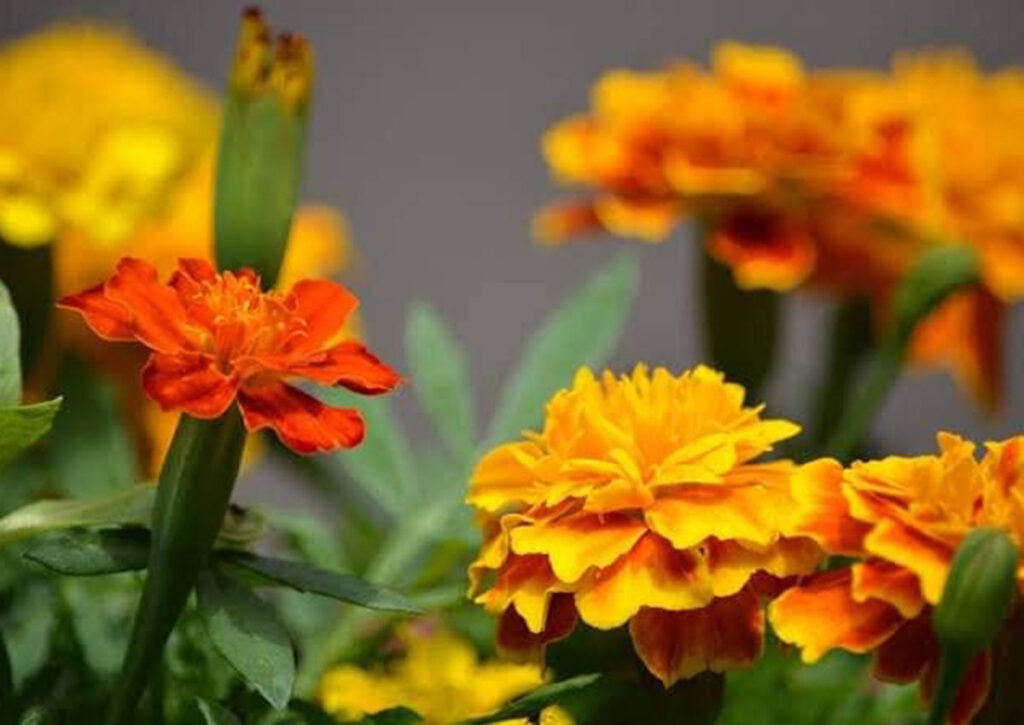
In Yucatán, Hanal Pixán has its own color. It is the yellow-orange of x’pujuc, the flower that crowns home altars, frames family photos, and brightens graves when the souls of the dead are said to come home.
This season, that color is getting harder to find.
Sara Colonia Sierra, of the plant seller Bazar de Plantas, says local production of x’pujuc has fallen so far that the native flower’s place in the tradition is at risk.
“There really is a risk,” she says. “It’s difficult to find these plants. In the nurseries we find the ones brought in from other regions, but here, locally, there are almost none.”
A local flower in a crowded market
Hanal Pixán, which means “food of the souls” in Maya, is Yucatán’s version of Mexico’s Day of the Dead. Families set up altars with candles, photographs, a green cross, and favorite foods, including the buried tamale known as pib or mucbipollo.
Flowers finish the scene. Alongside x’pujuc, altars often carry the red blooms called xtés and the small flower known as amor seco.
Some vendors and writers use x’pujuc as the Maya name for cempasúchil, the marigold that fills altars across Mexico. Others describe it as a wild variety native to the Peninsula. Colonia Sierra’s worry is the locally grown plant, which she says is now scarce on nursery shelves while flowers from elsewhere are easy to find.
Much of Mexico’s commercial marigold crop comes from states such as Puebla, Tlaxcala, Hidalgo, San Luis Potosí, and Oaxaca. Last year, bunches of x’pujuc and other altar flowers sold for MX$20 to MX$30 (about US$1 to US$2) at Mérida’s busy Lucas de Gálvez market.
Easy to grow at home
The good news, Colonia Sierra says, is that x’pujuc is not a fussy plant.
Unlike many ornamentals, it grows from seeds that can be gathered once flowering ends and saved for the following season. It is hardy, likes full sun, and needs little attention. That makes it a good fit for a patio garden in Mérida or a backyard in any Yucatán town.
Bazar de Plantas is selling x’pujuc plants for MX$40 to MX$60 (about US$2 to US$3). Colonia Sierra says the idea is for families to decorate their altars with them and then put them in the ground, so they keep reproducing.
She sees Hanal Pixán as the best moment to make that case, since late October is when people are already shopping for altar flowers.
Keeping x’pujuc around, she says, will depend on more people growing it and saving its seeds. That way, younger generations will know the flower and keep using it to honor their dead.
The timing fits. Altars are going up across the state, including 52 at Tuesday’s state altar showcase in Mérida’s Plaza Grande. Families set the table for children who have died on Oct. 31 and for adults on Nov. 1. Many visit cemeteries on Nov. 2.
For anyone who wants to try, the method is simple. Buy a plant, enjoy it on the altar, and move it to a sunny spot in the garden. When the flowers are done, collect the seeds, store them, and plant them next season.
Fast Facts
- Name: X’pujuc (also spelled xpujuc or x’pujuk), a yellow-orange altar flower
- Used for: Hanal Pixán altars and graves, with xtés and amor seco
- Price: MX$40 to MX$60 (about US$2 to US$3) per plant at Bazar de Plantas
- Growing needs: Full sun and very little care
- Seeds: Collect after flowering ends and save for next season
- Hanal Pixán: Oct. 31 to Nov. 2
With reporting from El Momento Yucatán and Por Esto!