

A man has been sentenced to more than nine years in prison for illegally possessing stolen fuel at a federal power installation in Cancún, the latest development in a string of theft operations targeting the same facility.
Mexico’s federal prosecutor’s office, the Fiscalía General de la República (FGR), announced a nine-year, four-month sentence against a man identified only as José N. — standard practice under Mexican law — for unlawful possession of hydrocarbons, the offense commonly known in Mexico as huachicol. He was also ordered to pay a fine of 9,600 UMAs, a federal unit of account worth MX$117.31 each, putting the penalty at roughly MX$1.1 million (about US$55,000).
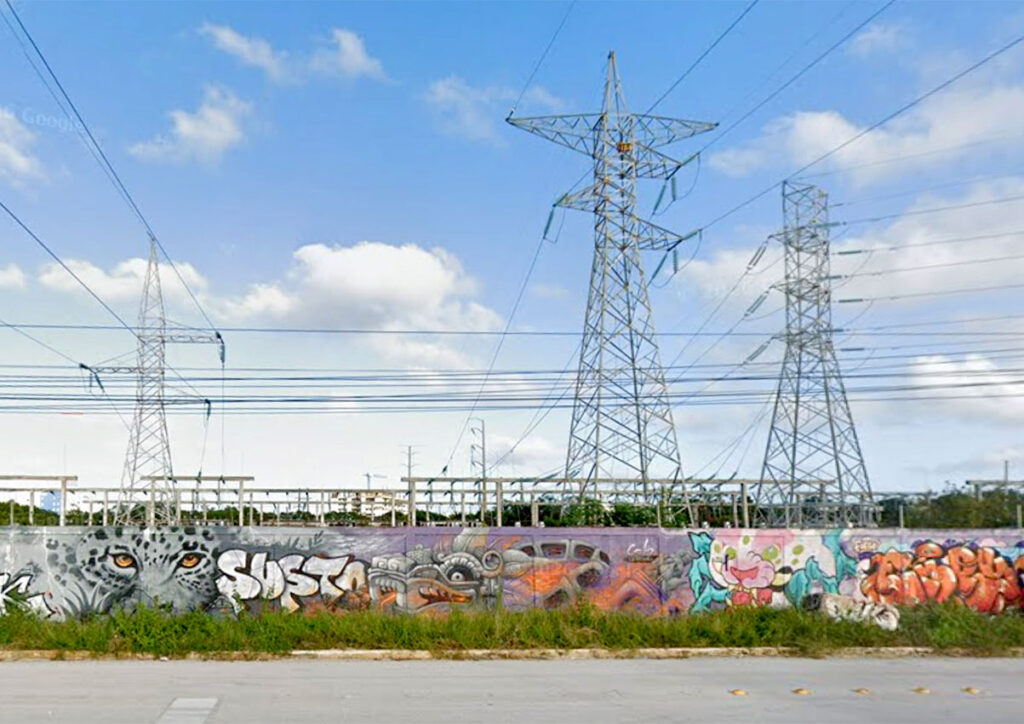
The case stems from an incident at the Central Turbo Gas substation operated by the Comisión Federal de Electricidad (CFE), Mexico’s state power utility, in the Supermanzana 54 neighborhood along Avenida Kabah. Investigators say José N. was found in possession of nearly 15,000 liters of diesel inside a tank trailer with a capacity of about 46,000 liters and could not prove the fuel’s legal origin.
The FGR noted that the conviction points to a more complex picture: an organized network systematically stealing jet fuel (turbosina) and diesel from the Cancún substation. Local media reported at least two separate incidents at the same facility in 2025. The first came in late August, when a nighttime confrontation between CFE security staff and two suspected fuel thieves set off an alert. The second occurred in December, when National Guard and Navy personnel followed a suspicious tanker truck along Avenida Kabah and traced it to the same substation. In that operation, the driver could not account for the fuel’s origin, and several people were detained and turned over to federal prosecutors.
Fuel theft is not a small-time crime in Mexico. The practice has evolved over decades from pipeline tapping into a sophisticated industry involving tanker fleets, fraudulent invoices, and in some cases, cartel backing. In the first half of 2025 alone, Pemex — Mexico’s national oil company — reported losses exceeding 7 billion pesos from huachicol operations. Federal authorities have also identified a distribution network moving illegally obtained fuel to gas stations in Cancún, Playa del Carmen, and Tulum, and in one major investigation documented the movement of more than 46 million liters of illicit fuel into Quintana Roo.
The CFE’s Cancún installation is not just any substation. Turbo gas plants burn jet fuel as well as natural gas to generate electricity, making them a target for thieves who can sell the stolen turbosina at a discount on the black market. The Caribbean coast, with its massive tourism infrastructure, has among the highest electricity demand in southeastern Mexico.
The huachicol problem has become a national political flashpoint. Mexico’s Supreme Court recently took up a high-profile case involving alleged diesel smuggling on an industrial scale, after a lower court threw out charges against a businessman accused of moving more than 21 million liters of contraband fuel. That case hinged on a procedural error by the FGR — a reminder that convictions, even when the evidence is strong, are not guaranteed.
For now, the Cancún sentence stands as one of the region’s clearest prosecutorial wins in the fight against fuel theft. The CFE has faced its own challenges on the Peninsula in recent years, from persistent blackouts to aging infrastructure, making the security of its fuel supply all the more critical.
Fast Facts
- José N. was sentenced to nine years and four months in prison for illegal possession of hydrocarbons at a CFE substation in Cancún.
- He was found with nearly 15,000 liters of diesel in a tanker trailer and could not prove the fuel’s legal origin.
- The fine was set at 9,600 UMAs — approximately MX$1.1 million (about US$55,000).
- The CFE’s Central Turbo Gas substation on Avenida Kabah was targeted at least twice in 2025 before this conviction.
- Federal authorities have identified an organized network stealing both diesel and turbosina (jet fuel) from the same facility.
- Pemex reported losses exceeding MX$7 billion from huachicol operations in the first half of 2025.
- Illegal fuel distribution networks have been documented operating across Quintana Roo, including in Cancún, Playa del Carmen, and Tulum.
- Huachicol is the colloquial term for fuel theft in Mexico, encompassing both direct theft from pipelines and infrastructure, and more sophisticated smuggling schemes.
Sources: Diario de Yucatán, PorEsto, Quinta Fuerza, La Jornada, Milenio