

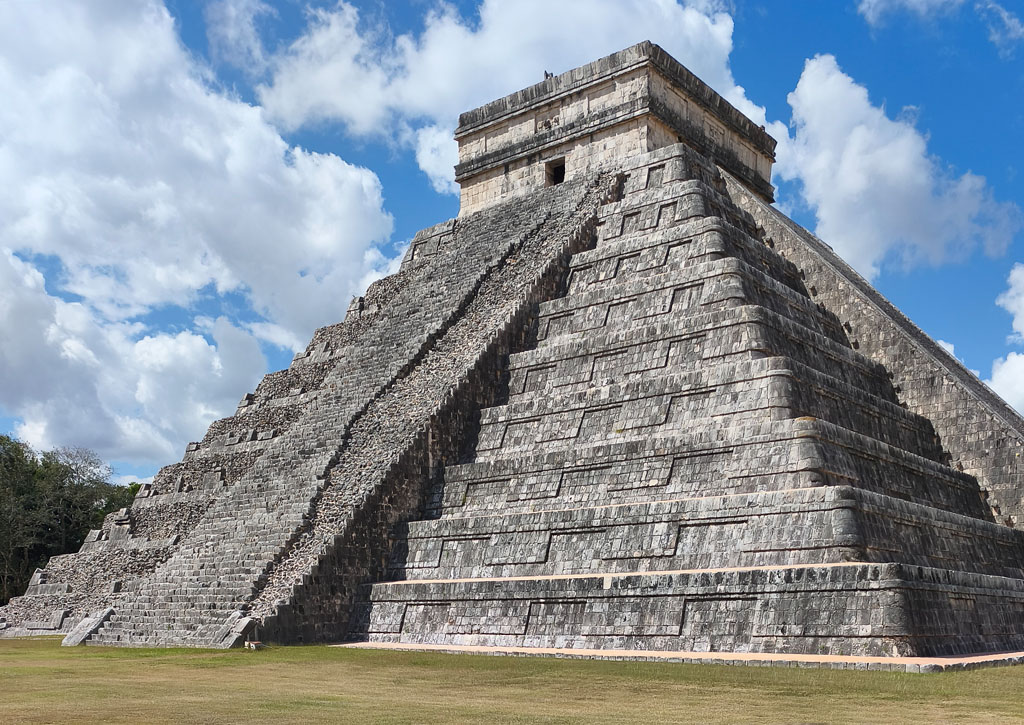
The long-simmering conflict between artisans and authorities at Chichén Itzá has once again deepened.
The Indigenous Governing Council of Pisté and the newly elected leadership of the artisan sector issued a joint statement rejecting the version of events put forward by the National Institute of Anthropology and History (INAH).
The council accused the federal agency of misleading the public about the process for registering merchants seeking access to the archaeological site.
The latest escalation came just one day after INAH released a communiqué titled “Registration of Artisans Proceeds in an Orderly Fashion at Chichén Itzá.” In that statement, the institute claimed that on July 3 and 4, the registration process was carried out in an organized manner, with the participation and coordination of the sector’s new representatives.
But the Indigenous Council rejected that claim outright, stating that while the newly elected leadership is willing to work with INAH, no such coordination has occurred.
The council also pointed to a fundamental inconsistency in the institute’s account. According to the Indigenous organization, the signed minutes from meetings with federal authorities do not include any provision for a daily registration requirement for those selling handicrafts within the archaeological zone. The council noted that the meetings were broadcast live, meaning there is no record of agreements beyond what appears in the official documents.
Key questions remain unanswered. INAH has not disclosed how many artisans were registered during the two-day process, who exactly comprises the new representative bodies it claims to be coordinating with, or whether the agency will follow through on its warning to deny access to those who do not register. As of the evening of July 14, those details had not been provided.
The Origins of the Current Dispute
The conflict at Chichén Itzá is not new, but it reached a breaking point in May 2026. On May 18, INAH personnel installed metal barriers at the old tourist stop area, which had long served as the traditional entrance to the site for both visitors and vendors. The move came while dialogue with the Indigenous Governing Council of Pisté was still ongoing, and the community viewed the action as a betrayal.
The following day, May 19, INAH announced the temporary closure of the archaeological site, citing security concerns. But the closure was widely understood to be a response to the growing protest movement. Artisans and merchants who worked inside the site organized demonstrations and blocked access, demanding that the old entrance remain open. The closure lasted 13 days, during which time approximately 9,000 visitors per day were turned away, delivering a severe blow to the local economy. Hotels, restaurants, and travel agencies in Pisté and surrounding communities came to a near standstill.
The CATVI Project and Relocation Demands
At the center of the dispute is the Centro de Atención a Visitantes, or CATVI, a new visitor service center built as part of the infrastructure for the controversial Maya Train project. The $46 million facility includes 962 commercial spaces, food courts, and guide facilities. It was designed to replace the old entrance and consolidate all vendor activity in a single, modernized location.
But the vendors have resisted the move for several reasons. The new facilities have been described as concrete shells packed tightly across a cement floor with no tree cover, an uncomfortable proposition under the punishing heat of the Yucatán.
Vendors have also expressed concern that while the spaces are being offered at no cost now, that arrangement may not last. One vendor named Alfonso, a local of Pisté, told reporters: “Nobody gives you anything for free. Once we move in, things will change, and they will want to charge us rent”.
INAH also confirmed that no artisans would be evicted and that a census conducted in 2025 would be used to determine who had the right to work within the site. But the agreement did not resolve the underlying tensions, and the registration requirement introduced by INAH in early July has now reopened old wounds.
The Indigenous Council’s Position
The Indigenous Governing Council of Pisté has been a central actor in the conflict. Formed during the protests, the council represents the Maya community that has long depended on Chichén Itzá for its livelihood. In its July 3 statement, the council affirmed its support for the newly elected artisan leadership, which was chosen by the community assembly. The council said these representatives have the artisans’ confidence to defend their labor and community rights.
The council also criticized the presence of State Police and National Guard troops at the site, describing the security deployment as an act of intimidation toward the community. The organization has alleged a pattern of discriminatory treatment toward the indigenous population, a charge that INAH has not publicly addressed.