

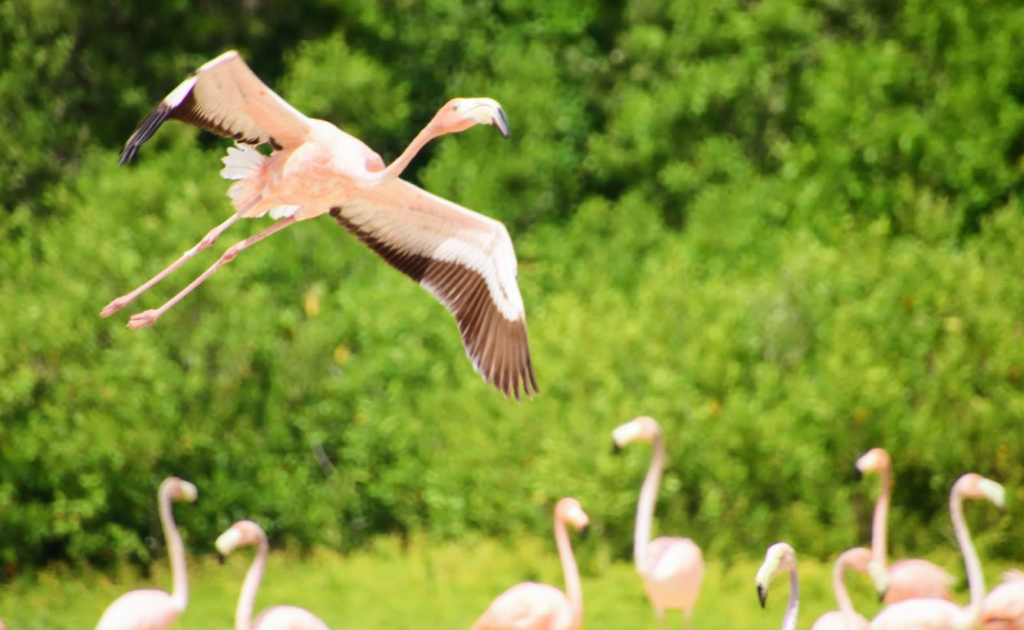
Local and federal authorities in Yucatán are increasing pressure for stricter enforcement of rules protecting the pink flamingo, a species that draws thousands of visitors to the coastal town of Celestún and other communities like Sisal and Ría Lagartos. The call comes as officials report repeated violations of restricted nesting zones within the Ría Celestún Biosphere Reserve.
According to the Celestún municipal government, nesting areas are highly sensitive. Any disturbance can cause stress to the birds, leading to nest abandonment and death of chicks of the Caribbean flamingo. In response, agencies including the Ministry of Environment and Natural Resources and the National Commission of Protected Natural Areas have installed signage at access points prohibiting entry to unauthorized zones during the breeding season.
Authorities have issued a set of clear recommendations. Visitors are told not to enter restricted sites or create new paths through nesting areas, as these actions alter the natural habitat. People should not approach the flamingos or cause them to take flight, since any disruption can push adults to leave their nests. Loud noises such as shouting or music are forbidden, as are sudden movements near the colonies. Drones are prohibited without special permission due to the stress they generate. Flash photography and bright-colored clothing are also discouraged to reduce visual impact. Pets, especially dogs, must not be brought into the area, as they pose a direct threat to nests. Tourism operators and visitors are advised to slow their boats and avoid running engines near flamingo groups.
The authorities have made clear that disturbing nesting zones is a federal crime, punishable under existing environmental laws, because of the harm it can cause to biodiversity.
The renewed emphasis on enforcement follows a widely publicized incident in nearby Sisal. The influencer known as Elisa la Yuca entered a nesting zone there, sparking national criticism over the risks such behavior poses to flamingo conservation. The event has become a reference point for officials arguing that current rules are not enough to deter visitors who prioritize photographs or social media content over wildlife protection.
Specialists have reiterated that the reproduction of the pink flamingo depends on very specific conditions. The birds require quiet, undisturbed spaces to successfully raise their young. Any increase in human presence, particularly during the breeding season, can undo years of conservation work.
Flamingo colonies in Yucatán are considered one of the region’s main natural attractions, but their survival depends largely on whether visitors and tour operators follow the restrictions. Authorities are now pushing for more frequent patrols and higher fines, hoping that stronger enforcement will prevent further incidents before the next breeding cycle begins.