

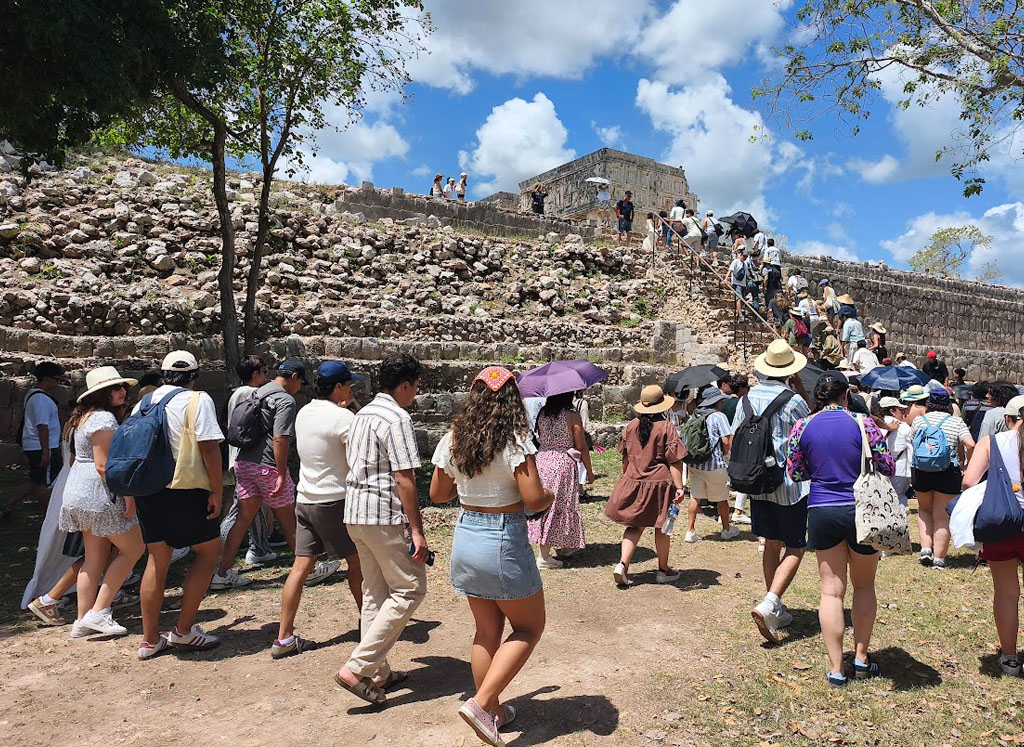
In the wake of a deadly shooting at Teotihuacán and subsequent security restrictions at Chichén Itzá, the nearby Maya archaeological site of Uxmal is seeing a noticeable increase in visitor numbers.
Following the April 20 shooting at Teotihuacán’s Pyramid of the Moon, which killed a Canadian tourist and injured several others before the attacker died by suicide, authorities moved quickly to reinforce security protocols across major archaeological zones in Mexico.
Chichén Itzá, located approximately 120 kilometers from Uxmal, implemented a temporary ban on backpacks of any kind. According to Guadalupe Espinosa Rodríguez, director of the Chichén Itzá archaeological site, the measure was initially applied on April 21 and 22, though officials indicated it could be extended depending on security assessments. The new rule requires visitors to leave all backpacks in their vehicles or in lockers provided for 50 pesos.
“The restriction is a preventive measure to guarantee a safe visit for tourists,” Espinosa Rodríguez said in a statement. Authorities have also reinforced screening at entry points in coordination with the National Guard, conducting inspections of all bags and personal items before allowing entry.
These changes have prompted some travelers to reconsider their itineraries. David Escalante Lombard, director of the Patronato Cultur, confirmed that both sites have increased vigilance, but Uxmal has emerged as an attractive alternative for tourists seeking a less restrictive experience.
“The security protocols are active at all of our archaeological zones,” Escalante said. “But Uxmal offers a different experience, one that is equally rich in Maya history”.
The Attendance Gap: A Fraction of the Visitors
Despite the recent surge in interest, Uxmal remains significantly less visited than Chichén Itzá. According to official figures from the Patronato Cultur, Chichén Itzá registered nearly two million visitors between January and November 2025 alone. Other reports indicate the site exceeded four million tourists for the full year of 2025.
In stark contrast, Uxmal recorded just 269,972 visits during the same January-November 2025 period. This means that for every visitor who walks the grounds of Uxmal, approximately seven people visit Chichén Itzá.
The disparity is even more pronounced when measured against regional totals. The state of Yucatán has seen an overall surge in cultural tourism during the first quarter of 2026, with the National Institute of Anthropology and History (INAH) reporting significant attendance increases across multiple sites. But Uxmal’s share of that growth remains modest compared to the colossal pull of Chichén Itzá, a UNESCO World Heritage site and one of the New Seven Wonders of the World.
New Sections of Uxmal Open to the Public
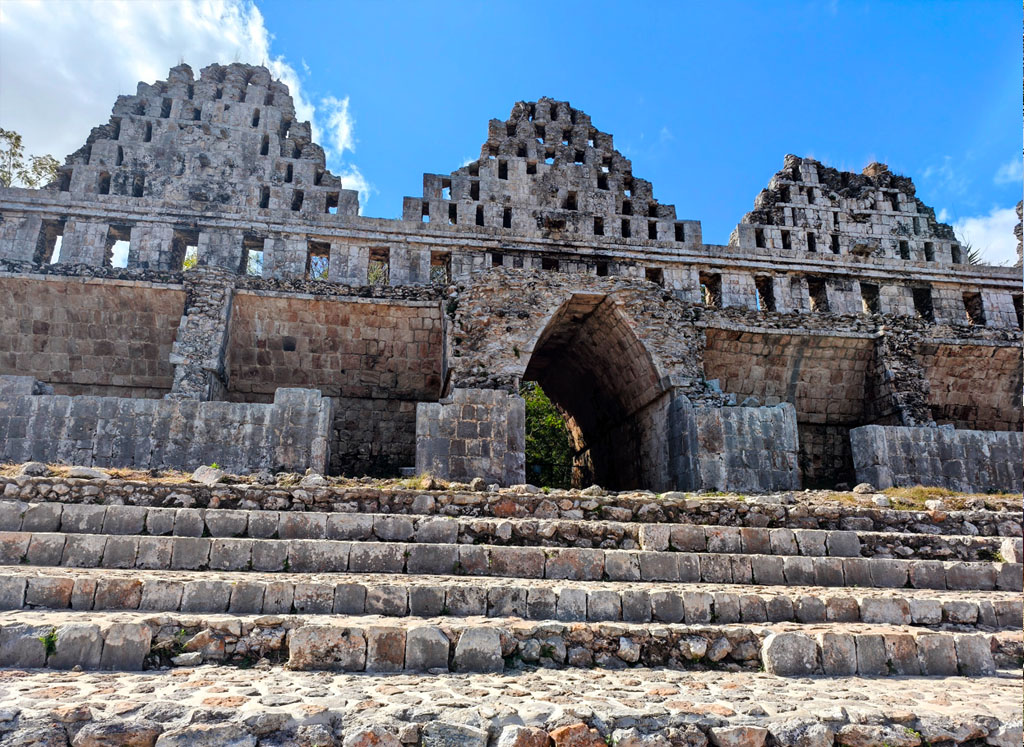
In an effort to attract more visitors and distribute foot traffic more evenly, INAH and local authorities have opened new sections of the Uxmal archaeological zone to the public. Among the newly accessible areas are “El Cementerio” (The Cemetery) and “El Templo de los Falos” (The Temple of the Phalluses).
“El Cementerio” is a complex of small structures and platforms located south of the main ceremonial center. Archaeologists believe the area served funeral purposes during the late Classic period, with tombs and offering deposits that provide insight into Puuc region burial practices.
“El Templo de los Falos,” named for the prominent phallic stone carvings incorporated into its architecture, is one of the more unusual structures at Uxmal. The carvings, which are relatively rare in Maya art, are believed to represent fertility and the continuity of life. The temple offers visitors a glimpse into belief systems that extended beyond the civic and astronomical themes prevalent in Uxmal’s better-known structures, such as the Governor’s Palace and the Pyramid of the Magician.
Officials hope these newly opened zones will encourage longer stays and repeat visits. “Uxmal has always been a site of extraordinary architectural quality,” said a spokesperson for the Patronato Cultur. “These newly opened sections allow us to tell a more complete story of the people who lived here”.