

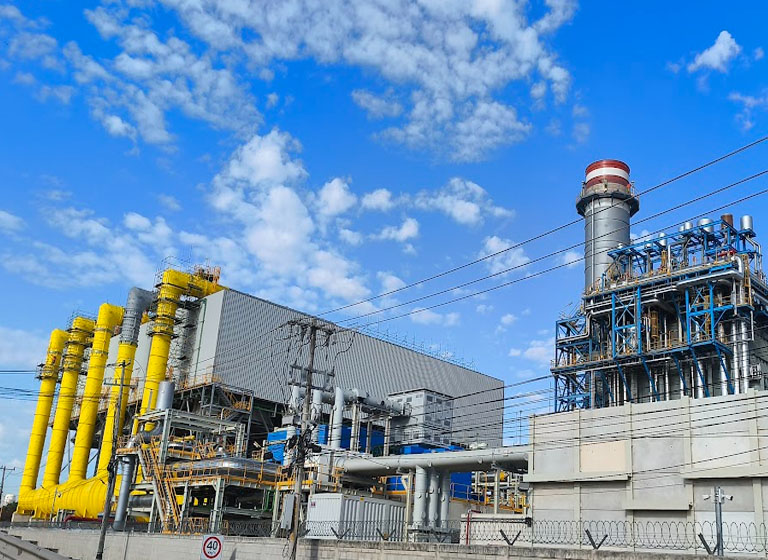
The Yucatán Peninsula is getting a major power upgrade. After years of blackouts, strained infrastructure, and surging electricity demand, two large-scale energy projects are finally coming online. The Mérida IV combined-cycle power plant will begin commercial operations this month, while the long-delayed Cuxtal II natural gas pipeline is scheduled to start in May of next year, according to a government report presented by Energy Secretary Luz Elena González Escobar.
The Mérida IV plant, named after feminist leader Elvia Carrillo Puerto, is part of a broader federal push for energy self-sufficiency. The plant is one of 13 new combined-cycle facilities planned under President Claudia Sheinbaum’s administration and is expected to add approximately 500 megawatts of capacity to the region. Meanwhile, the Cuxtal II pipeline represents an investment of over 2 billion USD, and will transport natural gas from Chiapas, Tabasco, and Campeche into Yucatán.
CFE Director General Emilia Calleja Alor emphasized that the pipeline expansion will significantly boost electricity availability across the peninsula. “With the expansion of this gas pipeline, there will be greater availability of electricity and, above all, natural gas in the Yucatán Peninsula, consolidating the development of tourism, industry, and other productive sectors,” she said.
An ‘Energy Island’ Reaches Its Limit
The need for new energy infrastructure is urgent. Decades of underfunding and rapid growth have pushed the peninsula’s power grid to its breaking point. Unlike most of Mexico, the Yucatán Peninsula functions as an “energy island,” connected to the national grid by just a single 400 kV transmission line. According to CFE data, by the end of 2024, the states of Yucatán, Campeche, and Quintana Roo consumed roughly 2,416 megawatts per day but only had 1,818 megawatts of local installed generation capacity. The remaining 600 MW had to be imported through that single vulnerable line.
The situation has become critical during heat waves. Temperatures across the region have climbed as high as 43°C (109°F), driving air conditioner use to record levels. In Mérida alone, residents suffered over 50 power outages in a single month during the summer of 2025.
At the national level, Mexico’s energy grid operator CENACE has identified the Yucatán Peninsula as the country’s “red point” — the most vulnerable zone heading into summer. Director General Ricardo Mota stated that “what we fear most is the lack of reliability in gas supply in the southeast.” As an immediate mitigation measure, CENACE has deployed 150 MW of portable emergency generation to the peninsula
The High Cost of Power Failures
The economic impact of these outages has been severe. According to the Confederation of Industrial Chambers (Concamin), each hour without power costs Mexico’s economy 800 million pesos (USD 47 million).
Local businesses are feeling the energy strain. Small businesses have reported losing up to 45,000 pesos ($2,600 dollars) per incident. Industrial parks in Valladolid and Progreso face production losses, damaged machinery, and rising operational costs as they turn to diesel generators. Foreign investors have taken notice, with energy reliability now among the first questions asked during investment negotiations.
The situation came to a head in September 2025, when a electirc energy failure on a single transmission line triggered a cascade of outages affecting 2.27 million users across all three peninsula states. Nine power plants with 16 generating units went offline simultaneously. Full restoration took over six hours, exposing how a single point of failure can destabilize the entire region.
Aging Energy Grid and Rapid Growth
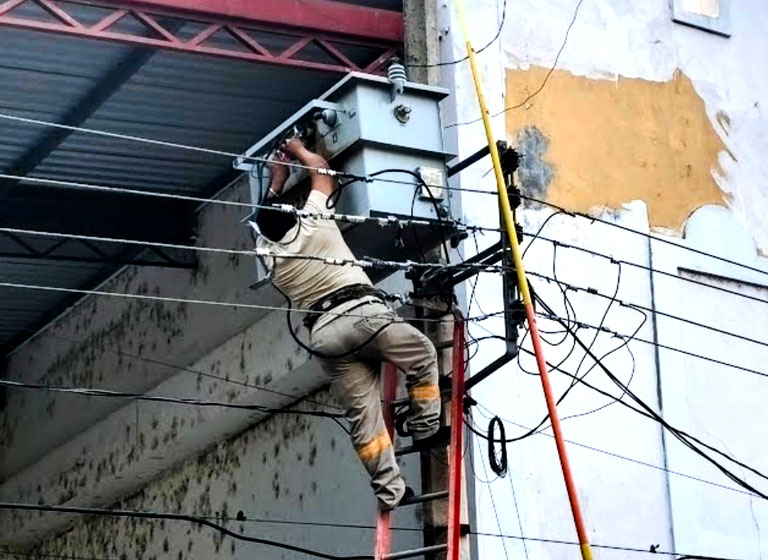
Beyond generation capacity, the physical network of transmission and distribution lines has deteriorated badly. Many transformers are operating beyond their design lifespan, and transmission losses are among the highest in Mexico. According to engineering experts cited by local media, the grid was never designed for the level of urbanization, industrialization, and digital dependency seen today.
The region’s growth has been explosive. Yucatán’s population was estimated at 2.5 million people in 2025, an increase of roughly 100,000 per year from the previous decade, according to INEGI data. Mérida’s rapid urban expansion has created new residential zones far from existing substations, requiring electricity to travel longer distances across aging wires.
A Stopgap Solution Until the Pipeline Arrives
The core problem, experts agree, is fuel supply. The combined-cycle plants in Mérida, Campeche, and Valladolid have repeatedly been forced to operate at reduced capacity or switch to expensive diesel when natural gas flows fall short. The pipeline delay has forced power stations to burn diesel and fuel oil, driving up both operational costs and carbon emissions.
The Cuxtal II pipeline is being built in phases. Phase II, 166 kilometers between Mérida and Valladolid, is scheduled for completion in June 2026. Phase III, 529 kilometers connecting Mérida to Ciudad Pemex in Tabasco, is now projected for May 2027. Until then, experts warn, the peninsula will remain vulnerable despite the new generating capacity.
The delays have had political consequences. In October 2025, a massive blackout lasting over six hours sparked urgent calls between affected governors and CFE headquarters in Mexico City. The governors — all from the ruling Morena party — feared that repeated outages could lead to voter backlash in upcoming midterm elections.