

The economic identity of Yucatán, Mexico, has long been defined by Maya archaeological sites, the colonial charm of Mérida, and the beaches of Progreso.
While tourism, real estate, and hospitality remain the backbone of the state’s public profile, an economic transformation is underway. Beneath the surface of the service economy, Yucatán is actively constructing a future based on advanced manufacturing, biotechnology, and heavy logistics.
Investment in New Sectors of the Economy
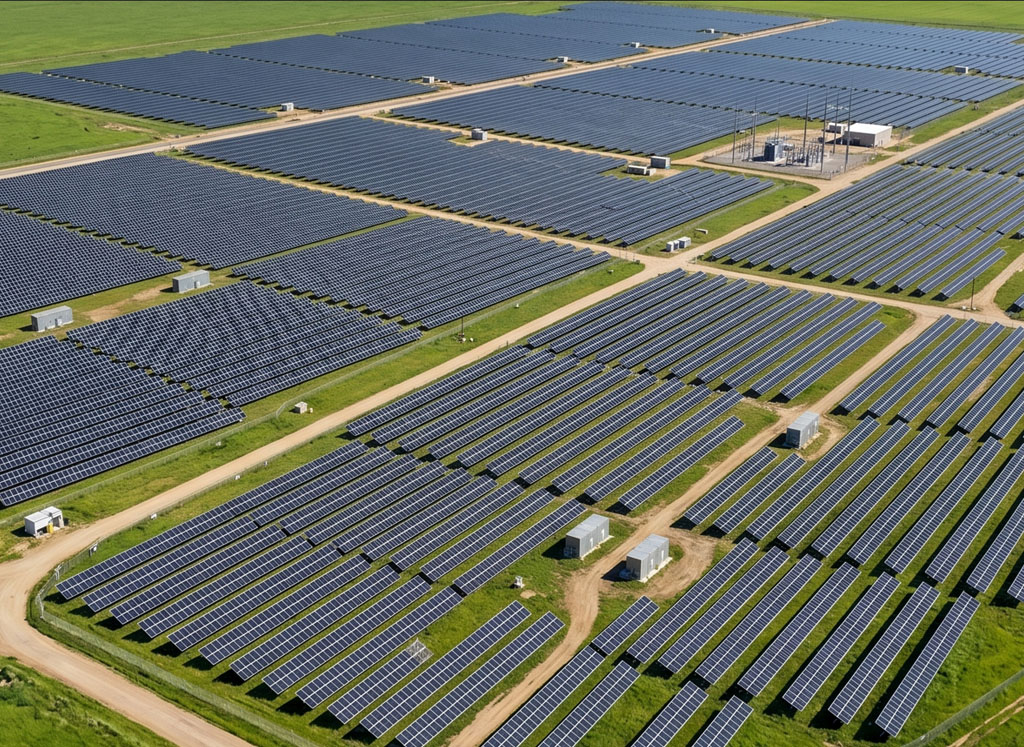
One of the most surprising developments is in the semiconductor and renewable energy sector. In early 2026, Ultimate Solar Advanced Technology (USAT) announced an MX $2.43 billion investment to build a semiconductor plant in the municipality of Kanasin.
This facility, unique in Latin America, will focus on the production of advanced solar cells with an annual capacity of up to one gigawatt, enough to power more than 1.5 million homes. The project is significant not only for its technological complexity but for the economic ladder it provides.
Officials estimate it will create roughly 1,000 highly specialized technical and engineering jobs, offering wages up to seven times higher than the average daily salary in the state. For years, Yucatán has suffered from a brain drain, with skilled graduates leaving for industrial hubs in the north of Mexico. This plant signals an effort to retain talent by introducing an employment category that previously did not exist in the region.
This high-tech bet is supported by a parallel expansion in traditional manufacturing. Data from the first half of 2025 shows that the manufacturing sector in Yucatán grew by 6%, significantly outpacing broader industrial indicators. A substantial portion of this growth is tied to the automotive supply chain.
For decades, the auto parts industry was concentrated in states like Guanajuato and Coahuila. However, Yucatán is emerging as a new frontier for nearshoring. Despite a challenging year for the national vehicle assembly sector, the auto parts industry remained a resilient anchor for the Mexican economy, with Yucatán specifically noted as a beneficiary of this trend as companies seek to shorten supply chains to the United States. The state is strategically positioning itself to supply the components needed for North American assembly lines.
Environmental Costs
Parallel to these industrial trends is an innovative response to an environmental crisis. The coasts of the Yucatán Peninsula have been plagued by unprecedented arrivals of sargassum seaweed, a phenomenon that threatens local marine life and tourism. Instead of simply hauling the algae to landfills, the state has industrialised the cleanup. A new facility called Implementaciones Estratégicas Marinas (IEM) was inaugurated in the Scientific and Technological Park of Yucatán.
This plant processes the problematic seaweed into commercial products, producing up to 50 million liters of biofertilizer and three tons of animal feed every month. This initiative transforms a costly waste management problem into a revenue stream for the agricultural sector, creating highly specialized jobs in applied environmental science and providing a scalable model for coastal communities globally.
None of these industrial gains would be possible without a massive overhaul of the state’s logistical capacity. The government is currently executing a multi-billion peso expansion of the deep-water port of Progreso, now branded as “Maya Kab”. In 2025 alone, contracts exceeding 1.3 billion pesos were signed for the first phase of this expansion, which includes extensive dredging to allow larger cargo ships to dock.
Further underscoring the port’s modernization, the container terminal operator ordered two new electric mobile harbor cranes in 2026 to replace diesel-powered equipment, signaling a move toward a more efficient and sustainable supply chain. The goal is to turn Progreso into the primary maritime gateway for the peninsula, capable of moving manufactured goods—from auto parts to solar panels—to global markets faster than ever before.