

Mérida authorities closed a restaurant on the Paseo de Montejo earlier this month following multiple citizen complaints about noise, sanitation issues, and traffic problems.
The Google listing for Piensarosa marked “temporarily closed.” The high-energy eatery inside the former Casa Jure was featured Yucatán Magazine’s 2022 “What’s New” issue, having been developed during the Pandemic, and opened with a splashy inauguration. The restaurant drew attention in another way, as well. Seating extended onto the sidewalk, where servers with trays mixed with pedestrians.
Civil Protection officers and Urban Development Department officials shuttered the establishment on September 12 after discovering it lacked basic operating permits, including a business license and land use authorization, according to city records.
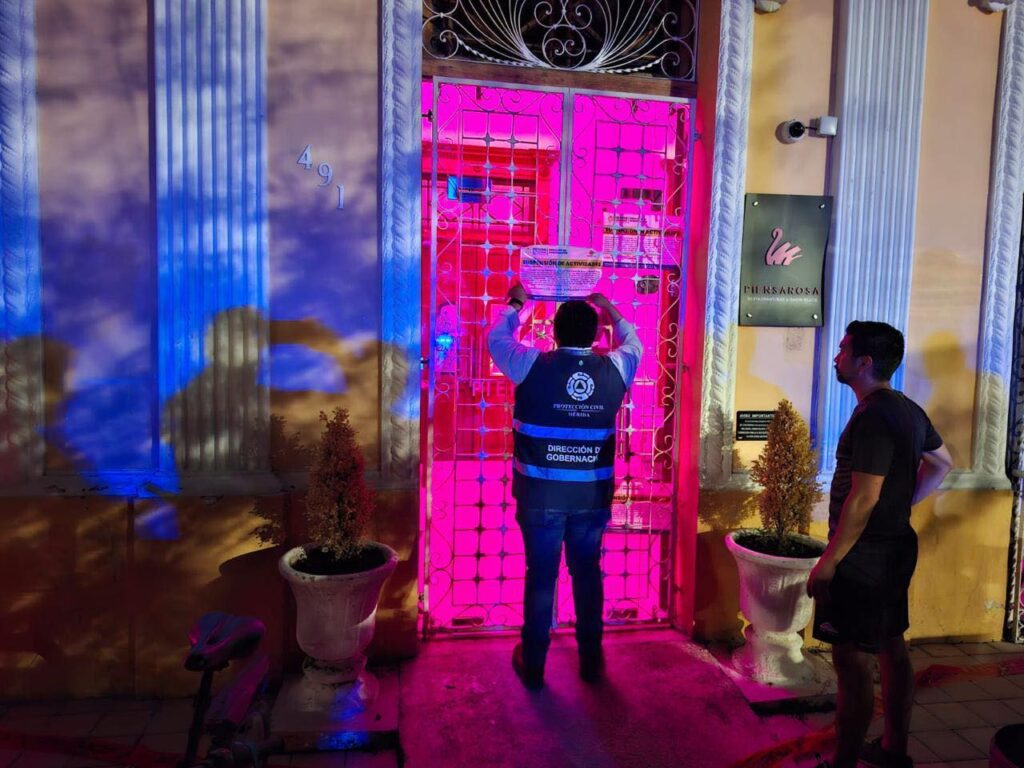
Unnamed neighbors — an Italian restaurant is next door, and residents live on the street behind it — filed complaints about excessive nighttime noise, unsanitary waste management, pest problems, and cooking grease being dumped into public drains. Residents also reported that restaurant patrons blocked access to their properties with parked vehicles.
“The restaurant was operating without any of the required municipal permits,” said a spokesperson for the Urban Development Department. The closure came after inspectors found multiple violations of Civil Protection regulations during their review.
The action reflects Mérida’s increasing enforcement of business regulations, particularly in areas near the iconic Paseo de Montejo where tourism and commercial activity have grown rapidly in recent years.
Restaurant permits in Mexico require multiple levels of approval. Business owners must obtain land use permits from municipal authorities, operating licenses from health departments, and compliance certificates from Civil Protection agencies before opening to the public.
The permit process, while designed to protect public safety and neighborhood quality of life, can be complex for new business owners. Municipal authorities require restaurants to demonstrate proper waste disposal systems, adequate fire safety measures, and compliance with zoning regulations.
In many Mexican municipalities, restaurants must prove they won’t create noise pollution or traffic congestion that disrupts residential areas. The land use permit specifically evaluates whether commercial activities are compatible with surrounding neighborhoods.
Recent enforcement actions show city officials taking a tougher stance on unpermitted businesses. Earlier this year, municipal teams removed 25 street vendors operating without permits near the popular La Isla shopping complex in northern Mérida.
The crackdown extends beyond food businesses. Authorities have closed bars and nightclubs for noise violations and shut down establishments operating beyond permitted hours. Some neighborhoods have organized to pressure city hall for stricter enforcement of existing regulations.
Business owners who want to operate legally face a bureaucratic maze that includes federal tax registration, state health permits, and municipal operating licenses. According to legal experts, the permit process can take several months and requires significant documentation.
“Companies must obtain permits from federal, state, and municipal governments,” notes a guide published by the Association of Corporate Counsel. The requirements ensure businesses meet safety standards but can overwhelm new operators unfamiliar with Mexican regulations.
The closed restaurant’s location near Paseo de Montejo, one of Mérida’s most prestigious thoroughfares, likely made violations more visible to authorities. The area has seen significant development pressure as the city’s tourism sector has expanded. Numerous commercial properties have been shut down before even opening, including what looks like a café next to Diego’s Urban Kitchen.
Municipal officials have not announced whether the restaurant owners plan to apply for proper permits or appeal the closure. Under Mexican law, businesses can face permanent closure if they repeatedly operate without authorization.
City officials encourage prospective business owners to consult with municipal offices before beginning operations to ensure compliance with all relevant regulations and avoid costly shutdowns.
Sources: Telesur Yucatan, Association of Corporate Counsel business permit guide, Waiterio restaurant permitting information, Universal Weather Mexico regulations documentation, GAN Integrity Mexico business risk report, Shelmex business compliance guide