

A couple who advertise architecture services on Facebook say they narrowly escaped an extortion attempt after a fake client lured them to a remote ranch near Oxkutzcab, a small town about 90 minutes south of Mérida.
The incident — which unfolded over roughly two hours — follows a pattern of increasingly sophisticated scams in which criminals use social media to identify and target professionals, then use fear and isolation to demand quick payments.
According to the male partner, who asked not to be identified, his partner received a message through a Facebook group where she regularly promotes her architectural services. The initial contact seemed routine. The potential client spoke with a Colombian accent and used enough construction terminology to come across as credible. Nothing raised a red flag.
The caller asked the couple to visit a property in Oxkutzcab to take measurements for a planned stable. They were given what seemed like professional details: a specific address, a scheduled time, a clear scope of work.
“They gave us very specific information. It seemed formal,” the man said.
When the couple arrived at the site, the person who had booked the appointment was unreachable. A rancher on the property let them in. Poor cellphone signal made it hard to communicate, but they eventually reached the supposed client briefly — and were then asked to provide personal identification to verify who they were.
Shortly after, a second caller got on the line. The tone shifted fast.
“At first it wasn’t a direct threat, but it was very intimidating,” the man said. The callers, whose numbers had international area codes that appeared to originate in Colombia, demanded a contact who could verify the couple’s identity. They gave the phone number of the architect’s father.
That was the pivot point.
“They told us they belonged to a cartel, that we had already passed their security checks and that we had to pay MX$100,000 (about US$5,000) to leave,” the man said. He hung up.
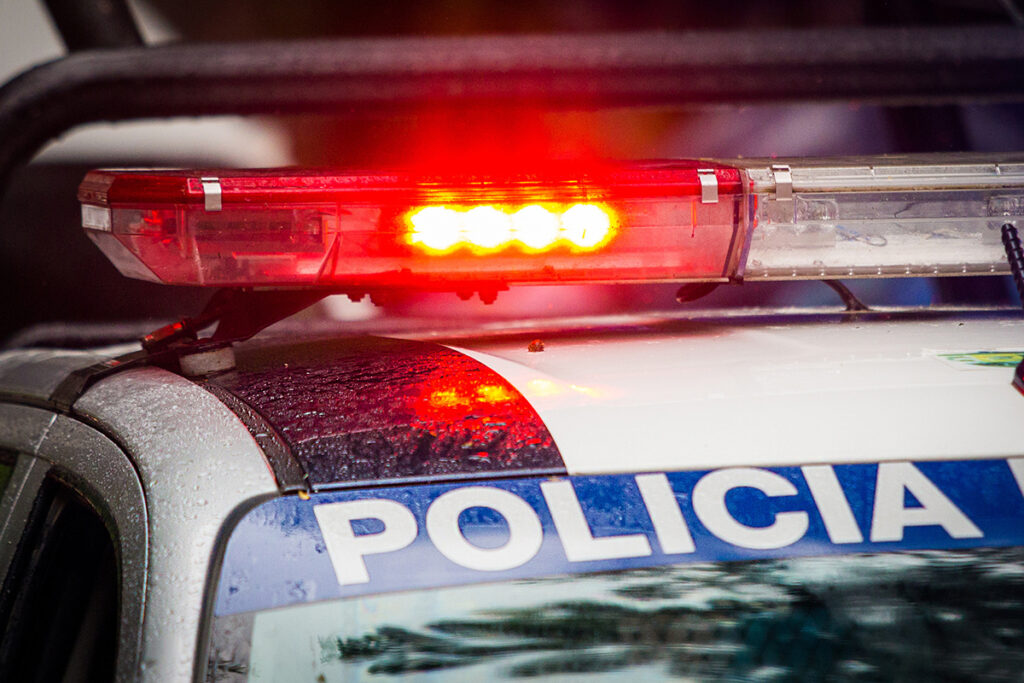
The couple tried to drive out but found the entrance to the property closed. They left their vehicle behind, climbed a wall, and walked about a kilometer before flagging down a passing rancher who calmed them down and told them that the area didn’t have that kind of criminal activity. They called 911, and officers from the Yucatán State Police responded, escorted them to a safe location, and helped them recover their vehicle without further incident.
The whole episode, from the extortion call to their exit, lasted about two hours. The threatening calls — which ran 10 to 15 minutes — were blocked and reported, though no formal complaint was filed with the state prosecutor’s office. A report was made with police.
The scheme fits squarely into a category that U.S. federal law enforcement calls “virtual kidnapping” — extortion attempts in which criminals impersonate cartel members or kidnappers to frighten victims into fast payments. The FBI has tracked these schemes for decades, noting that almost all of them originate in Mexico, many from inside prisons. The scam has evolved from cold calls to highly targeted approaches that use social media to identify and research victims in advance. Professionals — doctors, lawyers, architects — have been among those targeted.
What makes the Oxkutzcab case somewhat unusual is the physical component: the couple were actually lured to a remote location before the pressure began. Most virtual kidnapping schemes operate entirely by phone. The isolation, the bad signal, the unfamiliar surroundings — all of it amplified the psychological pressure the callers were counting on.
Yucatán remains among Mexico’s safest states, but scams targeting professionals and businesses have followed the region’s economic growth and its expanding digital marketplace. Criminals have shown a growing ability to identify targets through Facebook groups, WhatsApp, and other platforms where freelancers and small-business owners promote their services.
In this case, the couple’s composure — and the response of both a local rancher and state police — kept a frightening situation from becoming something worse.
Fast Facts
- The couple advertised architecture services through a Facebook professional group
- They were asked to visit a ranch near Oxkutzcab, about 90 minutes from Mérida
- Poor cellphone signal at the remote site added to the pressure
- Callers claimed cartel affiliation and demanded MX$100,000 (approximately US$5,000)
- The couple escaped on foot after finding the property entrance blocked
- Yucatán State Police responded to a 911 call, escorted them to safety, and helped recover their vehicle
- Phone numbers were blocked and reported; no formal criminal complaint was filed
- The FBI considers virtual kidnapping schemes — almost always originating in Mexico — one of the most underreported crimes in North America
Sources: Diario de Yucatán, FBI